Your toilets are gurgling. Multiple drains are moving slowly. There’s a faint sewage odor drifting up from the floor drain. These are the classic signs of a main sewer line clog, and they need attention fast.
To unclog a sewer line, your options range from DIY methods like plunging, snaking, or baking soda flushes for minor blockages, to professional services like motorized augering or hydro-jetting for serious clogs. Most homeowners spend between $187 and $569 to have a pro clear the line, according to HomeAdvisor data.
This guide covers exactly what causes sewer line clogs, how to recognize them, what you can try yourself, and when a professional is the right call.
What Causes a Main Sewer Line Clog?
The main sewer line is the large pipe that carries all wastewater from your home to the city sewer system. Every toilet, sink, and shower drains into it. When it clogs, the entire system backs up.
The most common causes:
Tree root intrusion. Tree roots naturally seek moisture and can penetrate even tiny cracks in sewer pipes. Once inside, they grow, catch debris, and eventually create a full blockage. This is one of the most frequent culprits in older neighborhoods with clay or concrete pipe.
Grease and fat buildup. Cooking oil poured down the drain looks liquid but cools and hardens inside pipes. Over years, a thick layer of solidified grease lines the pipe and eventually blocks flow.
Non-flushable items. “Flushable” wipes, paper towels, hygiene products, and household debris do not dissolve. They accumulate and create hard, solid blockages.
Pipe age and damage. Older cast iron, clay, or concrete pipes can crack, sag, or partially collapse. A sag (called a “belly”) creates a low point where debris collects and clogs form repeatedly.
Signs Your Main Sewer Line Is Clogged
A single slow drain usually points to a localized clog. A main sewer line clog produces a different pattern:
- Multiple drains are slow or backing up at the same time, especially fixtures on the ground floor or in the basement
- Using one fixture causes another to react: flushing the toilet makes water rise in the shower, or running the washing machine causes the toilet to overflow
- Gurgling sounds from drains or toilets after water runs elsewhere in the house
- Sewage odors coming from floor drains, toilets, or basement drains
- Unusually green or soggy patches in the yard along the path where your sewer line runs, which can indicate a leaking or ruptured line
If you see water or sewage backing up into lower-level fixtures, stop using all water immediately and assess the situation before it escalates to water damage.
How to Unclog a Main Sewer Line: DIY Methods
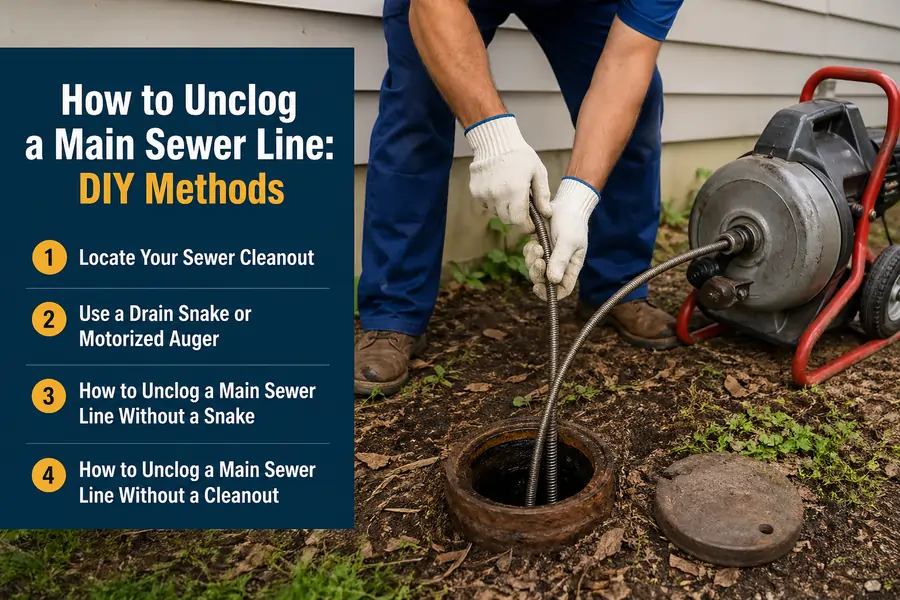
These methods work best for partial, early-stage clogs caused by grease or organic buildup. If you have signs of tree root intrusion, pipe damage, or full sewage backup, skip to the professional section below.
1. Locate Your Sewer Cleanout
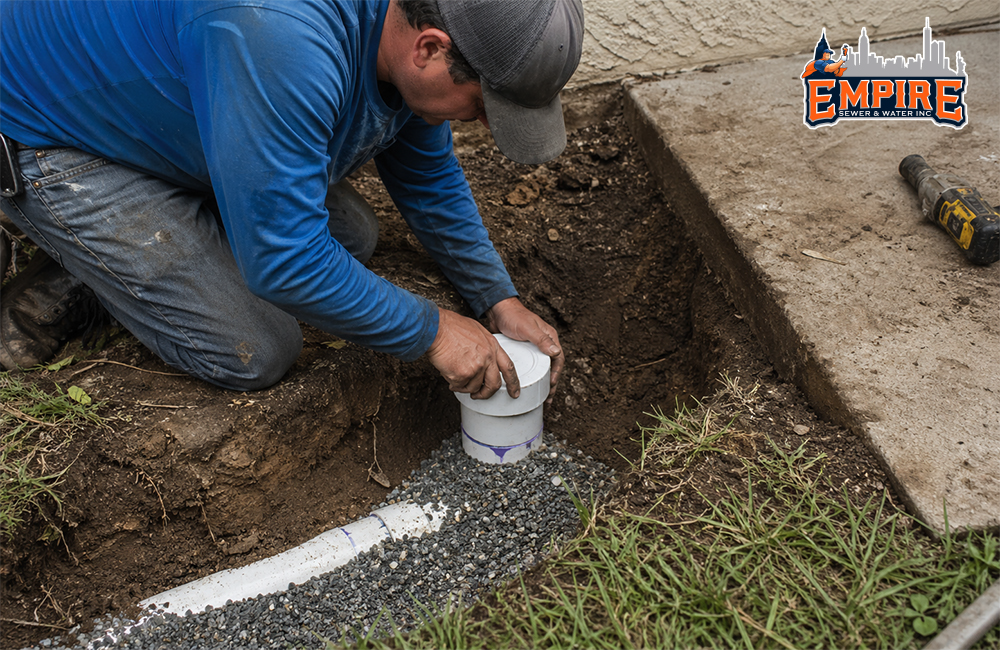
The cleanout is a white or black capped pipe in your yard, basement, or garage that provides direct access to the main sewer line. It is usually a 4-inch pipe with a threaded cap marked “CO.” If your home has one, this is your access point for both DIY and professional clearing.
Remove the cap slowly. If there is pressure behind it (sewage trying to push back), stand clear and let it release before proceeding.
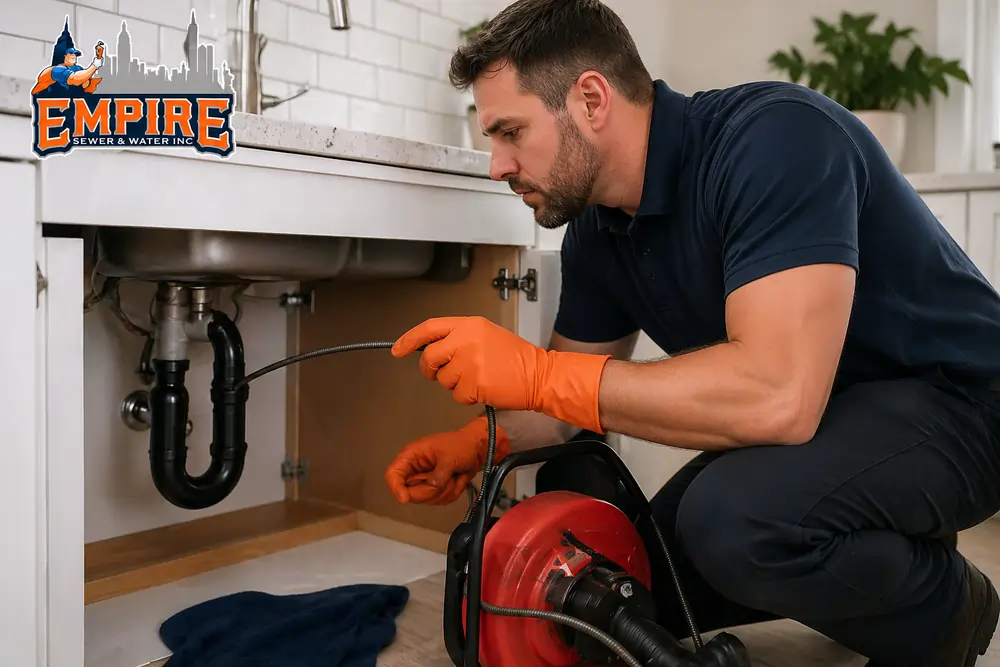
2. Use a Drain Snake or Motorized Auger
A manual drain snake works for shallow clogs within 25 to 30 feet of the cleanout. A motorized auger (rentable at hardware stores) handles deeper blockages.
Steps:
- Feed the snake cable into the cleanout opening.
- Advance it slowly, turning the handle clockwise as you push.
- When you feel resistance, work the snake back and forth to break up or hook the clog.
- Pull the cable out, clearing debris from the tip as you go.
- Flush the line with water to confirm flow has been restored.
Snaking is best for soft clogs like grease or paper buildup. It is not effective for tree root intrusion or pipe structural issues.
3. How to Unclog a Main Sewer Line Without a Snake
If you do not have a snake, try this for minor, grease-based clogs:
- Pour 1 cup of baking soda directly down the cleanout or the lowest drain in your home.
- Follow with 2 cups of white vinegar. The fizzing reaction helps break down organic buildup.
- Let the mixture sit for 30 minutes.
- Follow with a full kettle of boiling water to flush the loosened debris downstream.
This method works on soft, early-stage grease buildup. It will not clear a deep or root-caused blockage.
4. How to Unclog a Main Sewer Line Without a Cleanout
If your home does not have a sewer cleanout, your access points are more limited. Options include:
- Through the toilet: Remove the toilet and feed an auger directly into the floor drain opening.
- Through a roof vent: Some plumbers access the line through the plumbing vent stack on the roof. This requires comfort working at height and a long snake.
- Call a pro: Homes without cleanouts are harder and costlier to service. A plumber may recommend installing a cleanout (typically $2,000 to $5,000) to make future maintenance significantly easier.
When to Call a Professional
Some sewer clogs require professional tools and expertise. Call a professional plumber or sewer specialist when:
- Multiple fixtures are backing up and DIY attempts have not improved the situation
- Sewage is coming up from floor drains or the toilet
- You suspect tree root intrusion (roots require mechanical cutting equipment, not a standard snake)
- The clog keeps recurring within weeks, which often signals a pipe defect, belly, or root infiltration
- You have no cleanout access and cannot reach the blockage with household tools
What Professionals Use
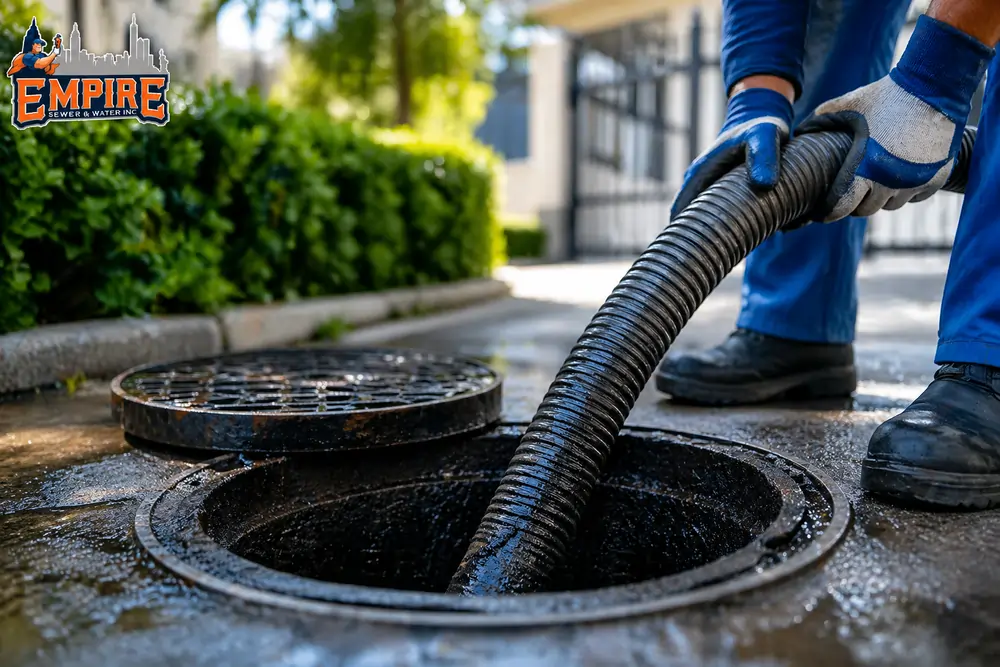
Motorized auger (drain snake). A professional-grade motorized auger reaches 75 to 100 feet or more and applies significantly more rotational force than a hand-cranked version. This is the standard first step for most sewer clogs and typically costs $100 to $500 depending on depth and difficulty.
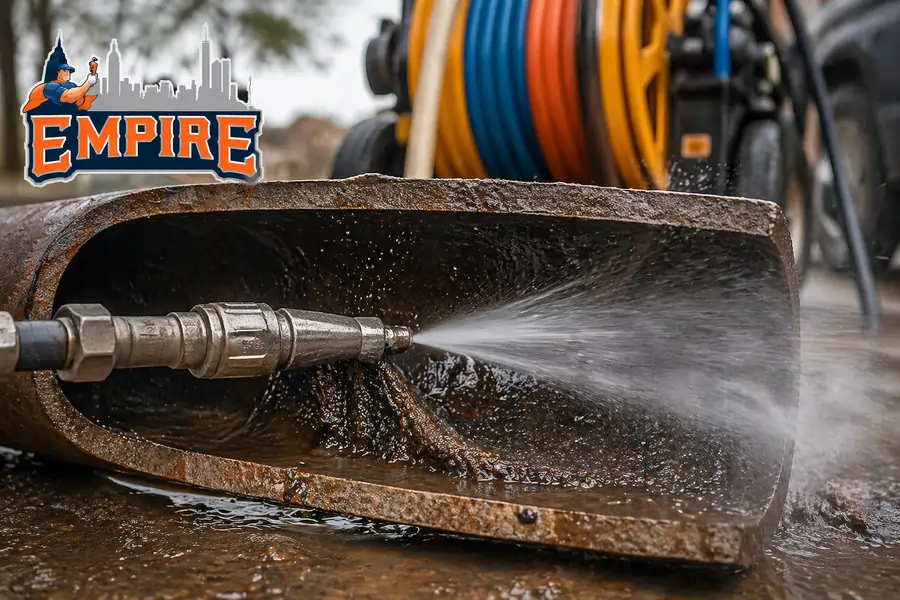
Hydro-jetting. A hydro-jet uses high-pressure water (typically 3,000 to 4,000 PSI) to blast away accumulated grease, scale, and debris from pipe walls. Unlike snaking, hydro-jetting cleans the entire pipe interior rather than just punching a hole through the clog. It costs $350 to $1,400 depending on pipe length and severity.
Sewer camera inspection. Before any clearing method, professionals often send a video camera down the line to identify the exact location and cause of the blockage. This prevents unnecessary work and protects older, brittle pipes from damage. A standalone sewer camera inspection typically costs $125 to $500, though many companies include it in their service packages. Empire Sewer and Water offers sewer camera inspections as a dedicated service.
How Much Does It Cost to Unclog a Main Sewer Line?
Costs vary based on method, clog depth, and pipe condition. Here is a practical breakdown:
| Method | Typical Cost Range |
|---|---|
| Snaking / Augering | $100 – $500 |
| Hydro-jetting | $350 – $1,400 |
| Sewer camera inspection | $125 – $500 |
| Tree root removal | $100 – $600 (plus possible pipe repair) |
| Full sewer line replacement | $50 – $250 per linear foot |
According to Angi’s 2026 data, the average main sewer line clog repair costs $379, with most homeowners spending between $187 and $569 for a standard professional clearing. Complex jobs involving tree roots, excavation, or pipe damage can push costs well above $1,000.
Emergency or after-hours service typically adds a premium. Most companies charge a service call fee of $50 to $200 that is often waived if you proceed with the repair.
If your line needs regular clearing (more than once every year or two), a professional sewer line cleaning service is worth scheduling proactively rather than waiting for a backup.
How Long Does It Take to Unclog a Sewer Line?
Most standard sewer line clogs take a professional one to two hours to clear. Tough clogs, root removal, or lines requiring camera inspection first can take two to four hours. Full pipe excavation or replacement is a multi-day job.
DIY clearing with a manual snake typically takes 30 minutes to two hours depending on how far the clog is from the access point.
How to Prevent Future Sewer Line Clogs
Prevention is significantly cheaper than clearing. These habits keep your main line clear:
- Never pour grease or cooking oil down any drain. Collect it in a container and dispose of it in the trash.
- Only flush toilet paper and human waste. All wipes (including those labeled “flushable”), paper towels, hygiene products, and household waste go in the trash.
- Install drain strainers in showers and sinks to catch hair and debris before it enters the drain system.
- Know where your large trees are in relation to your sewer line. Older clay or concrete pipe is especially vulnerable to root intrusion. A sewer camera inspection every few years can catch root intrusion early.
- Schedule professional drain cleaning every 18 to 24 months if you have a history of clogs, an older home, or large trees on the property. Learn more about how often sewer lines should be cleaned.
- Understand what hydro-jetting can do for maintenance. A periodic hydro-jet treatment removes grease buildup before it becomes a blockage. See what hydro-jetting is and how it works.
FAQ
How do I know if my main sewer line is clogged vs. a single drain clog?
A single drain clog affects only one fixture. A main sewer line clog causes multiple fixtures to drain slowly or back up at the same time. The clearest indicator: using one fixture (such as the washing machine) causes water to back up in another (such as the toilet or floor drain). That simultaneous reaction confirms the blockage is in the shared main line, not an individual drain pipe.
Can I unclog a main sewer line myself?
Yes, for minor or partial clogs. A manual snake or motorized auger from a hardware store can clear soft blockages within 25 to 50 feet of the cleanout. Baking soda and vinegar flushes help with early grease buildup. However, deep clogs, tree root intrusion, recurring blockages, or any situation involving sewage backup require professional equipment and expertise. Attempting to force a clog you cannot reach risks pipe damage.
How much does it cost to unclog a main sewer line?
The national average is approximately $379 according to Angi, with most professional jobs ranging from $187 to $569. Snaking costs $100 to $500. Hydro-jetting runs $350 to $1,400. Add $125 to $500 for a sewer camera inspection if the plumber needs to locate the blockage first. Tree root removal and any pipe repairs increase the total significantly.
What is hydro-jetting and when is it needed?
Hydro-jetting is a professional clearing method that uses high-pressure water (3,000 to 4,000 PSI) delivered through a specialized nozzle to scour the interior walls of a sewer pipe. Unlike snaking, which only punches through the clog, hydro-jetting removes grease, scale, and debris from the full pipe diameter. It is recommended for severe or recurring grease clogs, lines with significant buildup, and as a maintenance service to extend the interval between service calls.
How long does a sewer line clog take to fix?
Most standard professional clearing jobs take one to two hours. Complex clogs involving tree roots, limited access, or camera inspection can take two to four hours. If pipe repair or excavation is required, the timeline extends to a full day or more. DIY snaking typically takes 30 minutes to two hours depending on the clog’s depth.
Summary
A clogged main sewer line shows up as multiple slow drains, gurgling sounds, sewage odors, and backups across different fixtures. Minor clogs can often be addressed with a drain snake, motorized auger, or baking soda-and-vinegar flush. Serious clogs, tree root intrusion, and recurring blockages require professional augering or hydro-jetting.
The average professional clearing costs around $379, with most jobs falling between $187 and $569. Prevent future clogs by keeping grease and non-flushable out of your drains and scheduling professional drain cleaning maintenance every 18 to 24 months.
If you are seeing multiple backed-up fixtures or sewage backup, stop using water and contact a sewer specialist promptly. Acting early is almost always cheaper than waiting.