If your drains keep clogging no matter how many times you snake them or pour chemicals down the line, the problem probably isn’t the clog itself — it’s years of buildup coating the inside of your pipes. That’s where hydro jetting comes in.
Hydro jetting is a professional plumbing technique that uses high-pressure water — typically between 2,000 and 4,000 PSI — to scour the interior of pipes and flush out blockages, grease, mineral scale, tree roots, and debris. Unlike drain snaking, which pokes a hole through a clog, hydro jetting cleans the entire pipe wall, delivering longer-lasting results. It’s used for both residential and commercial plumbing systems.
How Does Hydro Jetting Work?
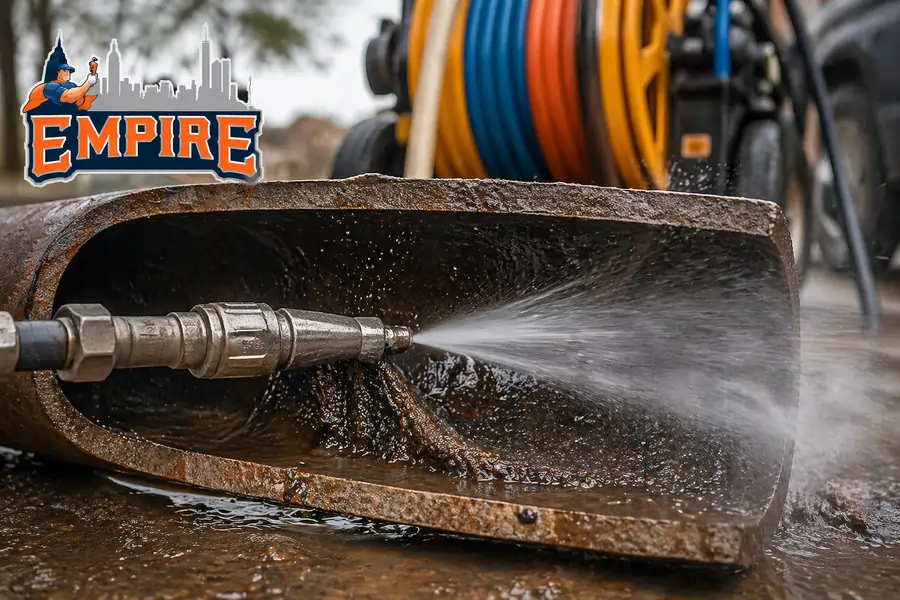
Hydro jetting uses a machine called a jetter, which includes a water tank, a high-pressure pump, a flexible hose, and a specialized nozzle. A licensed plumber inserts the nozzle into the pipe through an existing cleanout access point, then activates the machine to force pressurized water through the line.
The nozzle sprays water both forward and backward simultaneously. The forward jets break up blockages while the rear-facing jets propel the hose deeper into the pipe and scour the walls clean. Different nozzle shapes are used depending on the type of clog — a chisel nozzle, for example, cuts through hardened tree roots or ice buildup.
The Video Inspection Comes First
Before any hydro jetting begins, a professional plumber performs a camera inspection by feeding a small video camera down the sewer line. This step is not optional. It identifies where the blockage is, what it’s made of, and whether the pipe is structurally sound enough to handle high-pressure water. Older or fragile pipes — such as clay, corroded cast iron, or pipes with existing cracks — may not be suitable candidates and could sustain damage if jetting is applied without inspection first.
What Can Hydro Jetting Remove?
Hydro jetting is effective against a wide range of blockages and buildup, including:
- Grease and fats — A leading cause of sewer overflows, especially in restaurant and kitchen drain lines
- Mineral scale and calcium deposits — Common in older pipes and hard water areas
- Hair and soap scum — Frequent culprits in bathroom drains
- Tree roots — Hydro jetting can cut through smaller root intrusions; a mechanical snake may be used first on more severe root problems
- Silt, sand, and sediment — Commonly found in sewer lines and storm drains
- Grease from sewer lines — Routine hydro jetting of sewer lines helps municipalities and commercial properties avoid overflows
If you’re dealing with a sewer line clog that keeps coming back, hydro jetting is often the most effective long-term solution.
Hydro Jetting vs. Drain Snaking: What’s the Difference?
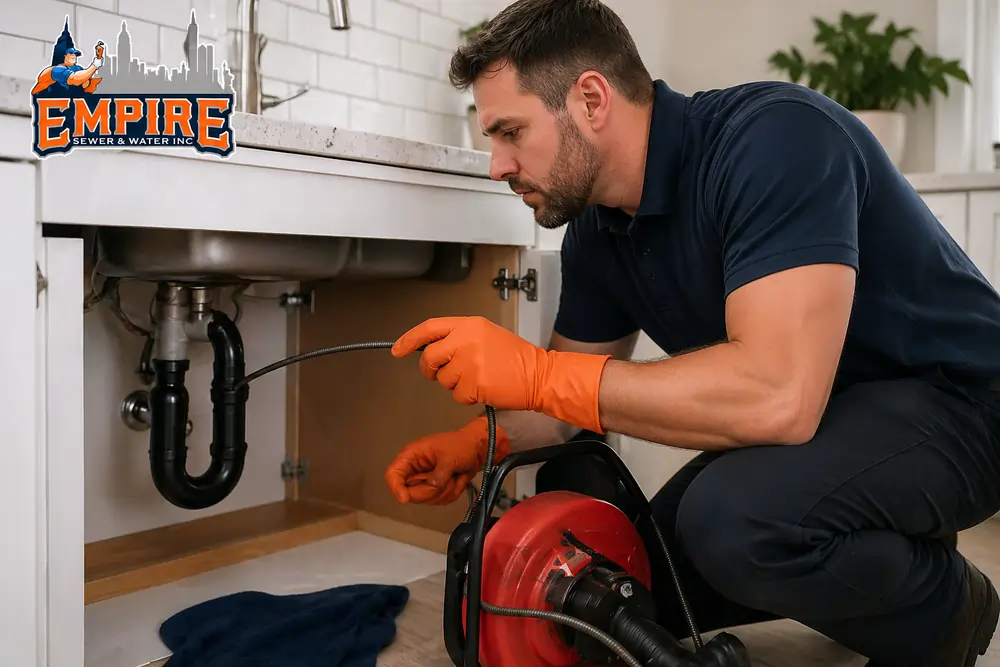
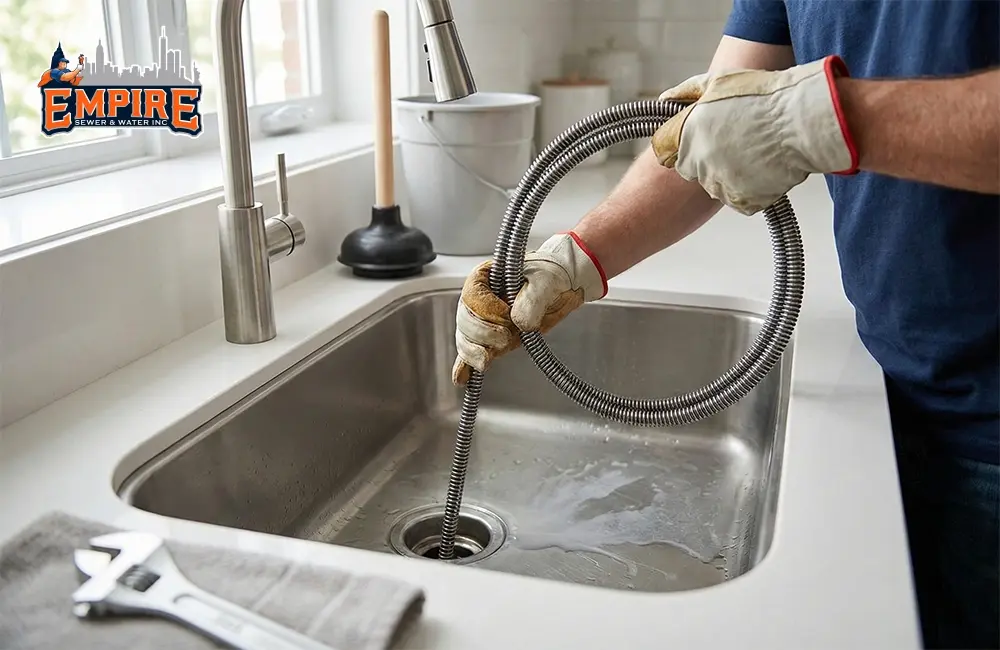
Many homeowners start with a drain snake — a long, flexible cable that physically breaks up or pulls out a blockage. Snaking works fine for minor, isolated clogs. But it has a significant limitation: it creates a hole through the center of the clog without cleaning the pipe walls. Residue, grease, and scale stay attached to the sides, which means the clog often rebuilds within weeks or months.
Hydro jetting takes a completely different approach. The high-pressure water stream cleans the full diameter of the pipe, removing buildup from the walls entirely. The result is a pipe that flows freely and stays cleaner for longer.
For a full breakdown of your drain cleaning options, see our guide on what is drain cleaning.
Benefits of Hydro Jetting in Plumbing
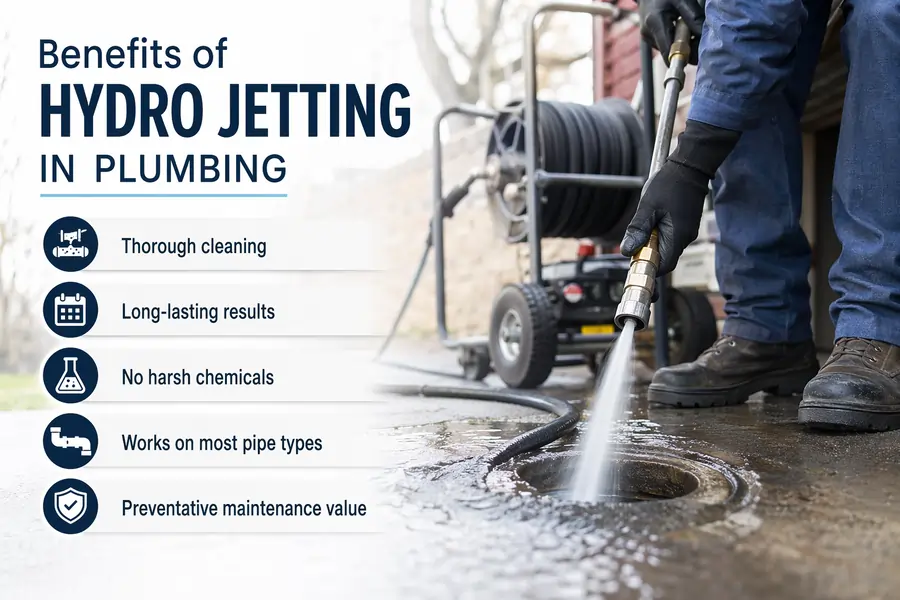
Thorough cleaning. Hydro jetting doesn’t just clear the clog — it removes the buildup that caused the clog in the first place. This is the core reason it outperforms snaking for recurring problems.
Long-lasting results. Because the pipe walls are scoured clean, there’s less surface for new debris to cling to. This reduces how often sewer lines need to be cleaned and delays the need for follow-up service.
No harsh chemicals. Hydro jetting uses only water. Chemical drain cleaners can corrode pipes over time and introduce harmful substances into the water system. Hydro jetting eliminates both concerns.
Works on most pipe types. PVC, copper, ABS, steel, and even older clay lines can be safely jetted when proper pressure settings are used. A professional will calibrate the PSI based on your pipe material and condition.
Preventative maintenance value. Hydro jetting doesn’t have to wait for an emergency. Scheduling routine jetting — particularly for commercial properties, restaurants, or homes with mature trees near sewer lines — can prevent backups before they happen.
When Do You Need Hydro Jetting?
You should consider calling for a hydro jetting service if you notice:
- Drains that are slow across multiple fixtures (not just one)
- Recurring clogs that come back within weeks of being snaked
- Gurgling sounds from toilets or drains
- Sewage odors coming from drains
- Sewer backups into toilets, tubs, or floor drains
- You’re preparing a property for pipe lining or repair work
Our professional hydro jet drain cleaning service is available for both residential and commercial properties.
Is Hydro Jetting Safe for Your Pipes?
For most modern plumbing systems, yes — hydro jetting is safe when performed by a licensed plumber using appropriate pressure settings. The risk comes when high pressure is applied to pipes that are already cracked, heavily corroded, or made of fragile older materials. That’s exactly why the camera inspection before jetting is essential, not optional.
If a pipe isn’t suitable for hydro jetting, a qualified plumber will recommend an alternative — such as mechanical snaking, targeted descaling, or pipe repair and relining through our sewer line cleaning service.
FAQ
What is hydro jetting in plumbing?
Hydro jetting in plumbing is the process of cleaning pipes and drain lines using high-pressure water delivered through a specialized nozzle. Water is pressurized to between 2,000 and 4,000 PSI and sent through a flexible hose into the pipe, removing grease, scale, tree roots, and debris from the full interior surface.
How much does hydro jetting cost?
Hydro jetting typically costs between $350 and $600 for residential service, with an average around $475. Severe blockages or large commercial lines can reach $1,200 or more. Pricing depends on the length and condition of the line, the type of clog, and accessibility of the cleanout. See our detailed guide on hydro jet drain cleaning cost.
How long does hydro jetting last?
Results vary based on pipe condition, usage, and what caused the original buildup. For most residential sewer lines, hydro jetting results last one to three years before maintenance is needed again. Restaurants and commercial properties with heavy grease output may benefit from annual or semi-annual service.
Is hydro jetting better than snaking?
For recurring or stubborn clogs, yes. Snaking removes the center of a clog but leaves residue on pipe walls, which leads to fast re-clogging. Hydro jetting scrubs the entire pipe interior clean. Snaking may still be the right choice for minor, isolated clogs or pipes too fragile for high pressure.
Can hydro jetting damage pipes?
Hydro jetting can damage pipes that are already cracked, heavily corroded, or very old. This is why a video camera inspection is required before the service. A qualified plumber will not proceed with hydro jetting if the pipe cannot safely handle the water pressure.
The Bottom Line
Hydro jetting is one of the most effective tools in professional plumbing for eliminating stubborn blockages and restoring full pipe flow. It works by using high-pressure water to clean the entire pipe interior — not just punch through a clog. When performed by a licensed plumber after a proper camera inspection, it’s safe, environmentally friendly, and delivers results that last far longer than snaking or chemical cleaners.
If you’re dealing with slow drains, recurring sewer backups, or want to schedule preventative maintenance, contact Empire Sewer & Water to learn whether hydro jetting is the right solution for your system.