Most homeowners never think about their sewer line until something goes wrong. By then, a backup or slow-draining system can mean hundreds to thousands of dollars in repairs that regular maintenance would have prevented.
So how often should sewer lines be cleaned? For most homes, every 18 to 24 months is the standard recommendation from plumbing professionals. However, certain factors can push that schedule shorter. This guide explains what those factors are, the signs your line needs attention now, and what the cleaning process involves.
The Standard Cleaning Schedule
The 18 to 24 month guideline applies to average households with no known pipe issues, normal water usage, and moderate tree coverage near the sewer line. Within that window, a professional cleaning removes gradual grease buildup, mineral scale, and light organic debris before it compounds into a blockage.
Sticking to this schedule is far cheaper than reacting to a backup. A routine sewer line cleaning typically costs $200 to $500. Emergency cleanout after a full sewage backup can run $1,000 or more, not counting any water damage.
Factors That Require More Frequent Cleaning
Not every home fits the 18 to 24 month window. Clean your sewer line more often if any of these apply:
Older home or older pipes. Homes built before 1980 often have clay, cast iron, or Orangeburg pipe. These materials corrode, crack, and collect buildup more readily than modern PVC. Annual cleaning is a reasonable baseline for older plumbing.
Large household or heavy water usage. More people means more grease, waste, and debris moving through the line every day. Households of five or more often benefit from annual rather than biennial cleaning.
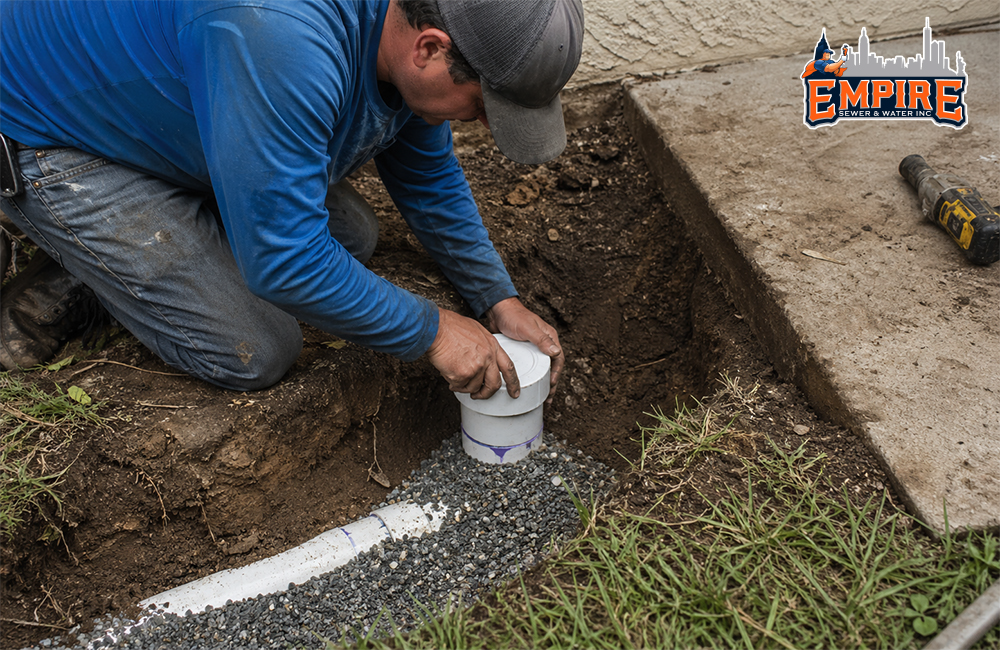
Trees close to the sewer line. Tree roots are one of the most common causes of sewer line damage and blockage. Roots enter through small cracks and grow over time, trapping debris and restricting flow. If you have large or mature trees in your yard, annual inspections and cleanings reduce the risk of a root-caused emergency.
History of recurring clogs. If you have had your sewer line cleared more than once in a two-year span, the problem is likely structural: a belly in the pipe, root intrusion, or heavy scale buildup. More frequent cleaning keeps the line functional while you assess a longer-term fix.
Restaurant or commercial property. Grease accumulates far faster in commercial kitchens than in residential ones. Commercial lines typically need cleaning every 3 to 6 months.
Signs Your Sewer Line Needs Cleaning Now
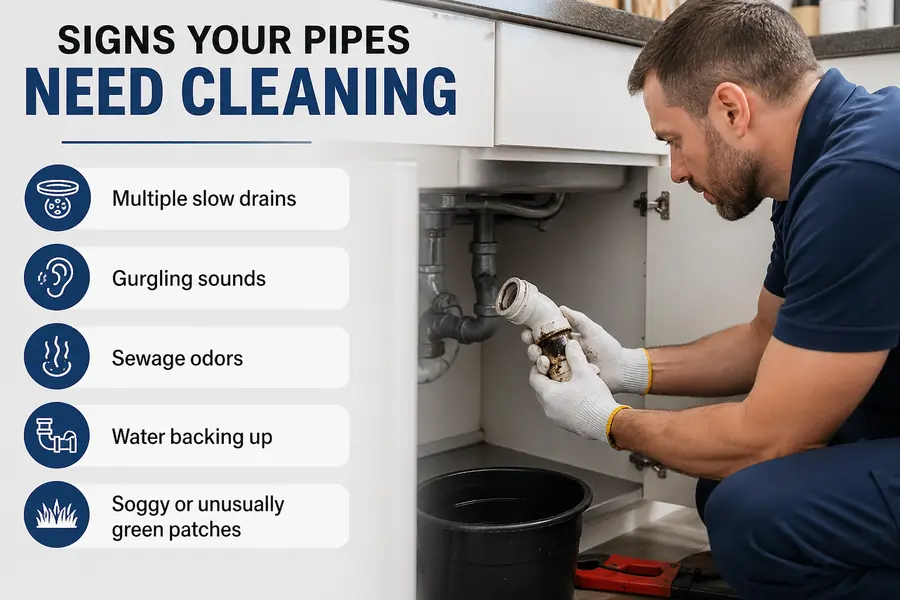
Do not wait for your scheduled maintenance if you notice any of these:
- Multiple slow drains throughout the house, not just in one fixture
- Gurgling sounds from toilets or drains after water runs elsewhere
- Sewage odors coming from floor drains, basement drains, or yard
- Water backing up into tubs, showers, or the toilet when another fixture is used
- Soggy or unusually green patches in the yard along the path of the sewer line
A single slow drain usually points to a localized clog. When multiple fixtures are affected at once, the problem is almost always in the main sewer line. See how to unclog a sewer line for what to do when those signs appear.
What Happens During a Professional Sewer Line Cleaning
A professional cleaning typically follows this sequence:
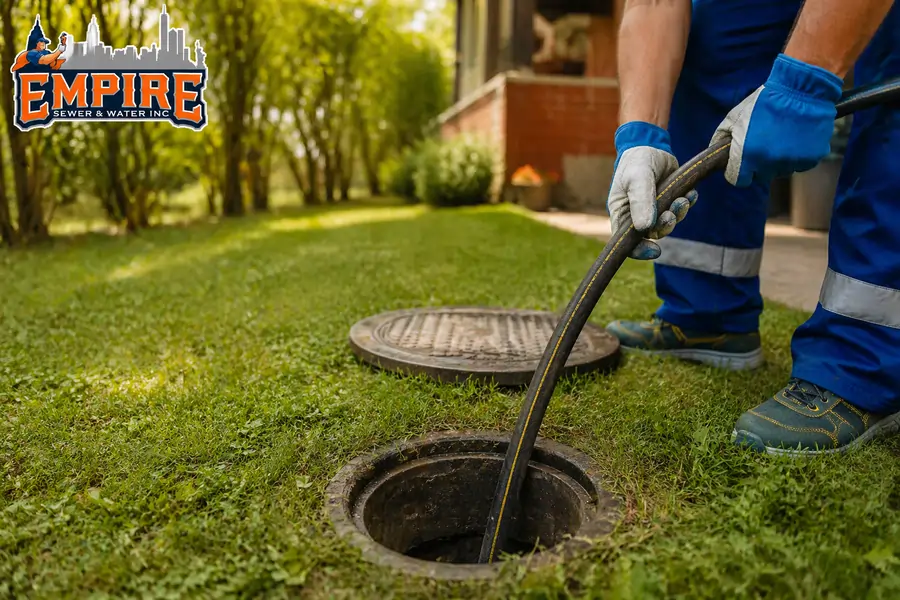
1. Camera inspection. A technician feeds a video camera through the cleanout to locate blockages, assess pipe condition, and identify any structural issues like cracks or root intrusion. This step determines which clearing method is appropriate. Empire Sewer and Water offers dedicated sewer camera inspection as part of the service process.
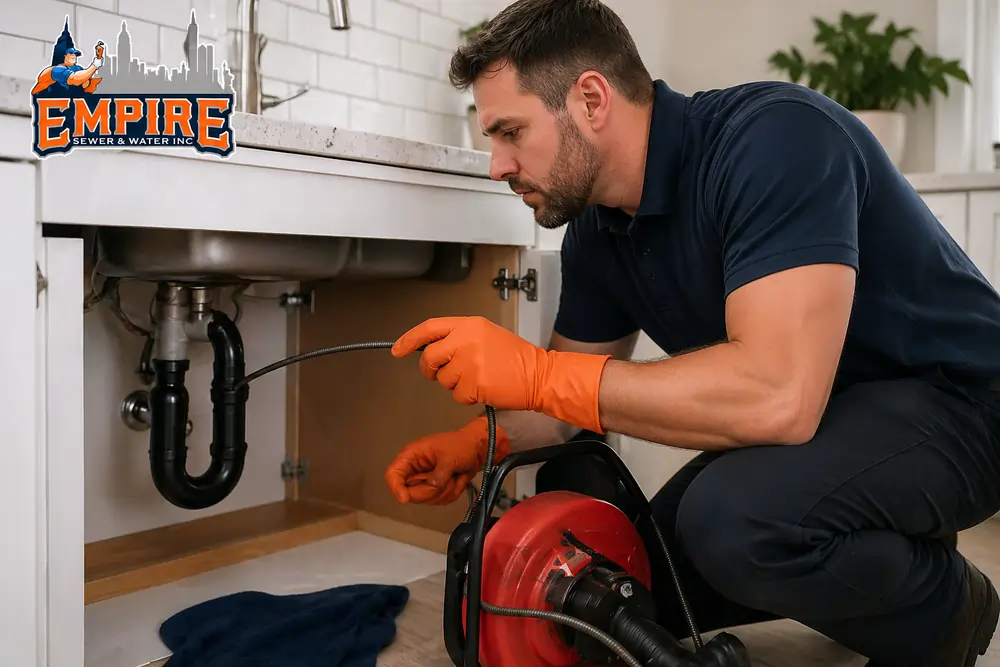
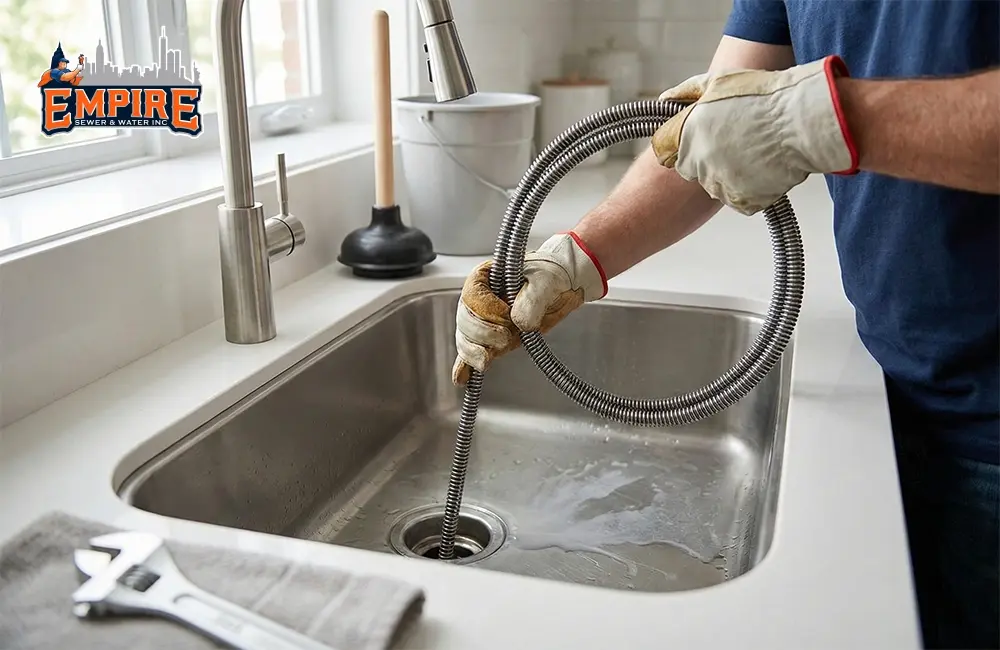
2. Snaking or augering. For standard blockages and routine buildup, a motorized drain auger breaks up and clears the clog. This method costs $100 to $500 and handles most grease, paper, and light debris clogs.
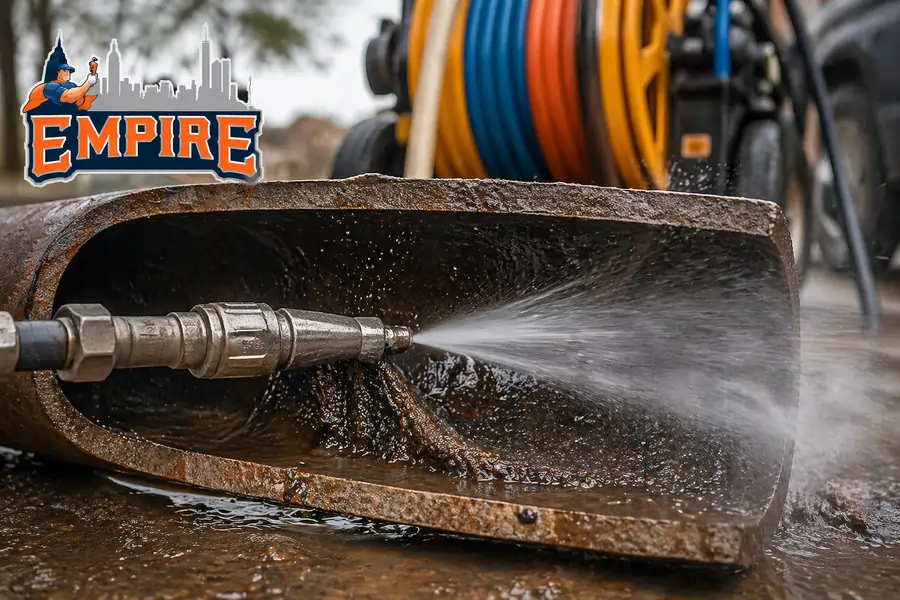
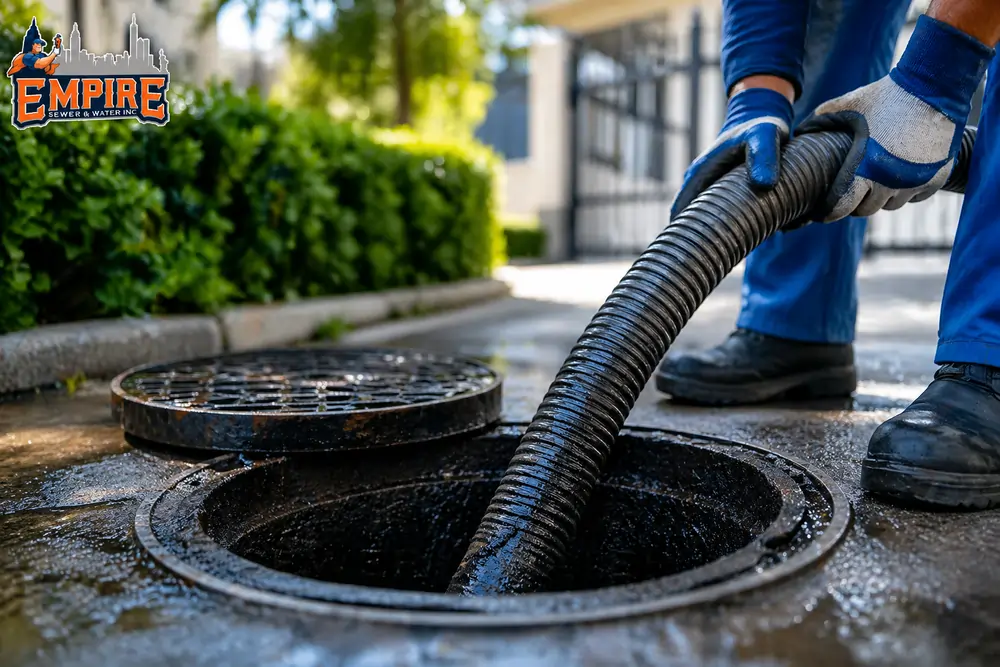
3. Hydro-jetting. For more stubborn buildup, heavy grease, or tree root intrusion, hydro-jet drain cleaning uses high-pressure water (3,000 to 4,000 PSI) to scour the entire pipe interior. Unlike snaking, hydro-jetting removes buildup from pipe walls rather than just clearing a path through the clog. It costs $350 to $1,400 depending on pipe length and severity.
The full process typically takes one to three hours for a standard residential line.
Snaking vs. Cleaning: What Is the Difference?
Snaking your sewer line and cleaning it are not the same thing, though the terms are often used interchangeably.
Snaking is reactive. It punches through an existing clog and restores flow. It does not remove the buildup coating the pipe walls that caused the clog in the first place.
Cleaning (particularly hydro-jetting) is proactive. It removes accumulated grease, scale, and debris from the pipe interior so the next clog takes much longer to form.
For routine maintenance, a full cleaning every 18 to 24 months is more effective than snaking whenever a slow drain appears. Snaking as needed in between is fine, but it does not substitute for a thorough cleaning.
How to Extend the Time Between Cleanings
A few habits reduce how quickly buildup accumulates:
- Never pour cooking grease or oils down any drain. Collect them in a container and dispose of them in the trash.
- Only flush toilet paper and human waste. Wipes, paper towels, and hygiene products cause blockages regardless of what the packaging says.
- Run hot water for 30 seconds after washing greasy dishes to push residue further down the line.
- Use an enzyme-based drain cleaner monthly to digest organic buildup before it compacts.
- Keep tree roots in check by knowing where your sewer line runs and avoiding planting large trees nearby.
FAQ
How often should sewer lines be cleaned out?
For most homes, every 18 to 24 months is the right interval for preventive sewer line cleaning. Older homes, large households, and properties with mature trees near the sewer line should consider annual cleaning. If you are seeing slow drains, gurgling sounds, or sewage odors, have the line inspected and cleaned regardless of when the last service was done.
How often should I snake the sewer line?
Snaking is best done on an as-needed basis when you notice a slow drain or early signs of a blockage. There is no reason to snake a line that is draining normally. For full preventive maintenance, a hydro-jet cleaning every 18 to 24 months is more thorough than snaking alone.
What are the signs of a main sewer line clog?
The clearest signs are multiple fixtures draining slowly at the same time, gurgling toilets, sewage odors from floor drains, and water backing up into a tub or shower when the toilet is flushed. A single affected fixture usually indicates a localized clog. Multiple fixtures pointing to a problem at the same time almost always mean the main line is blocked.
How much does sewer line cleaning cost?
A professional sewer line cleaning costs $200 to $500 for standard augering and $350 to $1,400 for hydro-jetting. A camera inspection typically adds $125 to $500, though many companies include it in their service package. Costs vary by region, pipe length, and clog severity.
Does cleaning frequency change for older homes?
Yes. Pipes in homes over 30 to 40 years old are more prone to corrosion, buildup, and root intrusion. Annual cleaning and inspection is a reasonable standard for older plumbing. A camera inspection can confirm the current pipe condition and help determine the right maintenance schedule for your specific system.
Summary
For most homeowners, sewer lines should be cleaned every 18 to 24 months as a preventive measure. Older homes, large families, properties with many trees, and anyone with a history of recurring clogs should clean more frequently, typically annually.
Do not wait for a backup to act. Routine sewer line cleaning is one of the lowest-cost ways to protect your plumbing and avoid the much higher expense of emergency service or pipe repair.