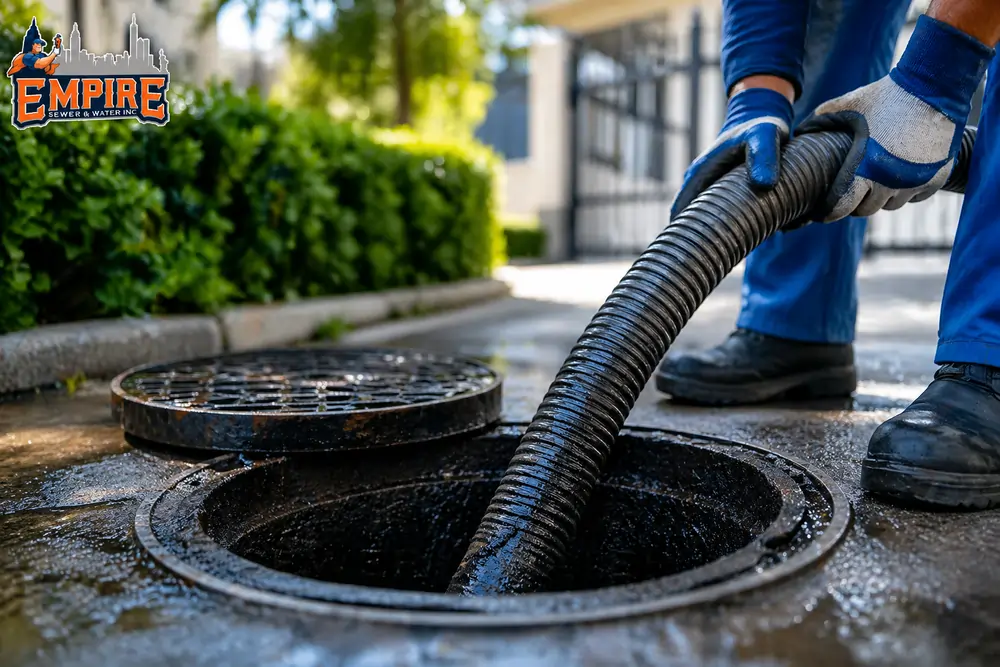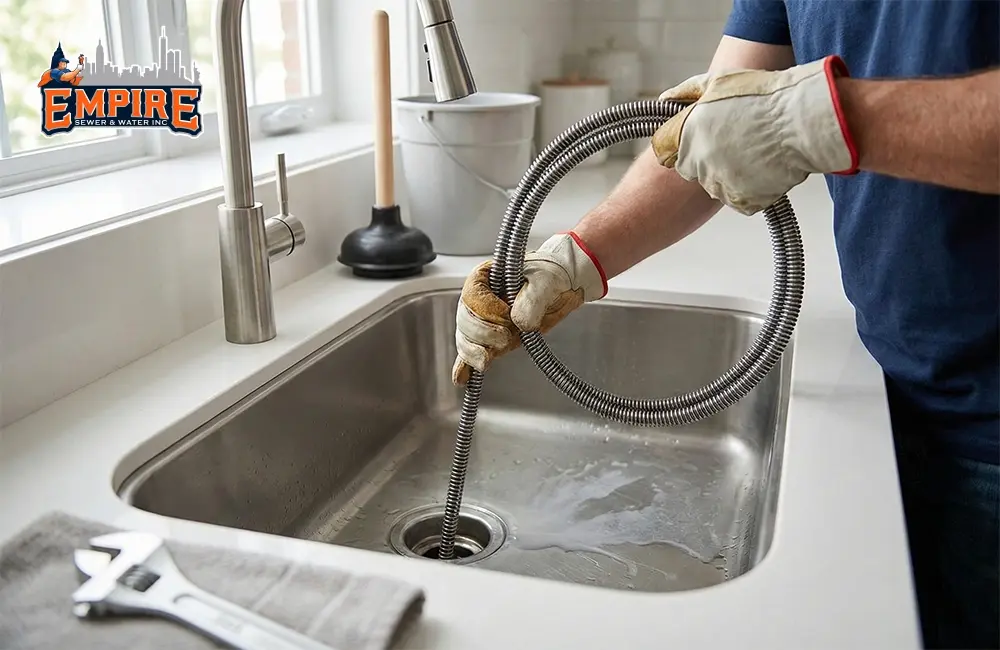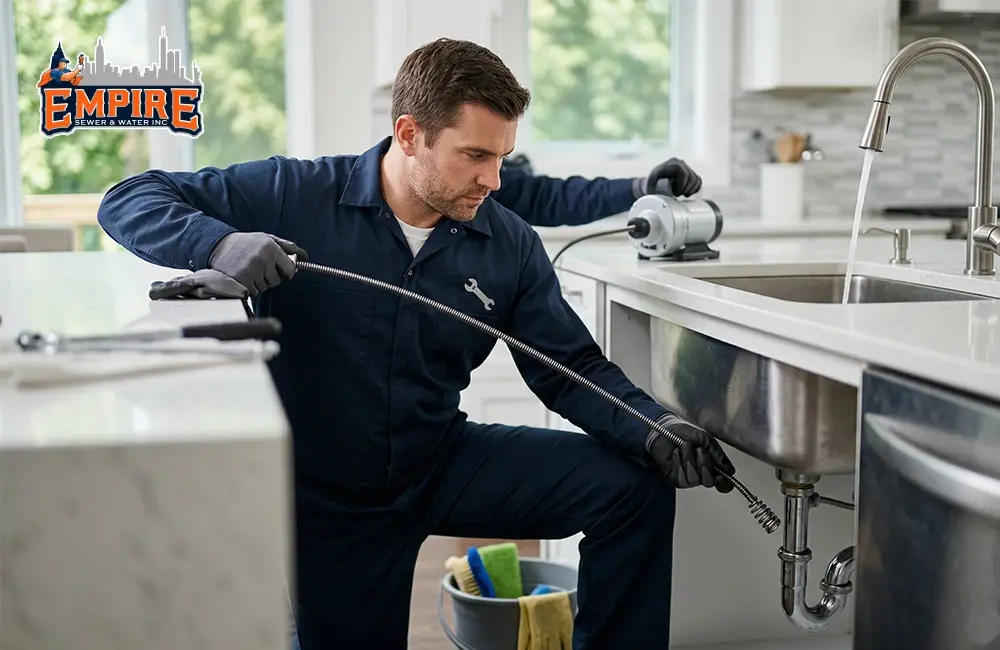
Drain cleaning is the process of thoroughly removing buildup, debris, grease, and blockages from the inside walls of your pipes and sewer lines – restoring full water flow and preventing future clogs. Unlike simply unclogging a drain, professional drain cleaning addresses the root cause inside your pipes, whether it’s accumulated grease, hair, mineral deposits, or even tree roots invading your sewer line. If you’re a homeowner in New York dealing with slow drains, recurring clogs, or foul odors, this guide covers everything you need to know.
What Is Drain Cleaning in Plumbing?
Drain cleaning is a professional plumbing service that removes accumulated waste, scale, grease, and organic buildup from drain lines, sewer pipes, and the entire plumbing system. It goes far beyond clearing a single clog – it’s a comprehensive process that restores the full interior diameter of your pipes so water flows freely and efficiently.
When a plumber performs a drain cleaning service, they’re not just pushing through a blockage. They’re treating the pipe walls, removing years of buildup, and ensuring your plumbing system operates the way it was designed to.
How It Works Inside Pipes
Inside your pipes, substances like grease, soap scum, hair, and mineral deposits gradually coat the pipe walls over time. Left untreated, this buildup narrows the pipe’s interior, slows water flow, and eventually causes a full clog. Professional drain cleaning uses specialized equipment – from high-pressure water jets to mechanical augers – to strip this buildup from the pipe walls and flush it completely out of the drain line.
Why It’s More Than Just Removing a Clog
Many homeowners assume that once water flows again, the job is done. But clearing the clog is only half the story. A clog is a symptom; the real problem is the buildup inside your drain and sewer lines. Drain cleaning removes that buildup entirely, which is why it’s considered preventative maintenance, not just a reactive fix. It keeps your plumbing system healthy for the long term.
What Does Drain Cleaning Consist Of?
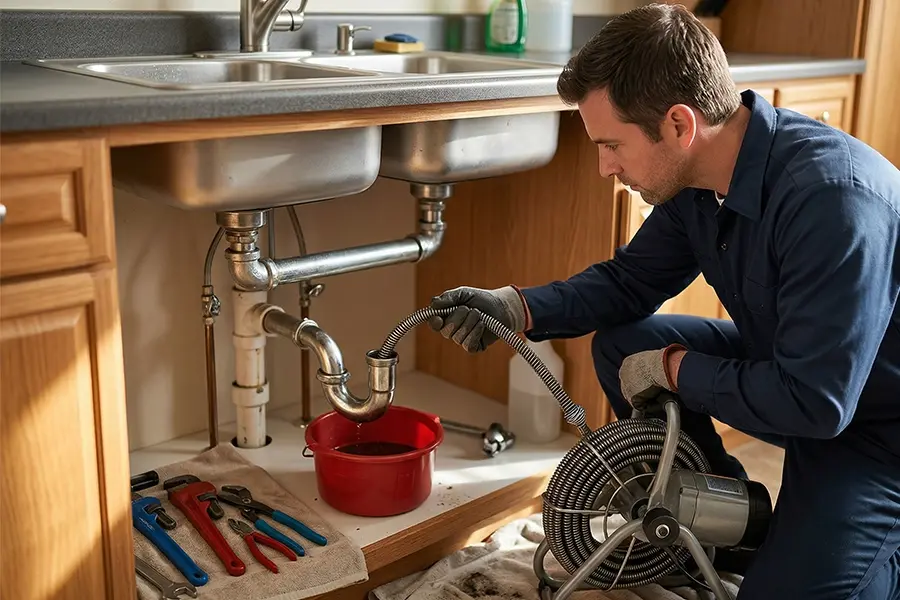
Inspection of Drain and Sewer Lines
Every professional drain cleaning process begins with an inspection. A licensed plumber will assess the drain and sewer lines to understand the severity and location of the issue. In many cases, this involves a sewer camera inspection that allows the technician to see exactly what’s happening inside your pipes – no guesswork required.
Identifying Blockage Types (Grease, Roots, Debris)
Not every blockage is the same. A professional plumber identifies the type of buildup before choosing a cleaning method. Common blockage types include:
- Grease and fat deposits — common in kitchen sink drain lines
- Hair and soap residue — typical in bathroom and shower drain pipes
- Tree root intrusion — a serious issue in main sewer lines
- Mineral scale and sediment — found in older galvanized pipes
- Foreign objects — accidental items that cause a clogged drain
Identifying the blockage type is critical because using the wrong method can damage pipes or fail to fully resolve the drain issue.
Cleaning vs. Clearing Process
The drain cleaning process involves two stages. First, there’s drain clearing – physically breaking apart or removing the immediate obstruction to restore water flow. Then comes the full drain cleaning, which scours the drain walls and pipe interiors to eliminate all residue and buildup. Think of clearing as opening a blocked road, while cleaning is repaving the entire surface.
Tools Used by a Professional Plumber
A professional plumber brings several specialized tools to a drain cleaning appointment:
- Hydro jet machines — use highly pressurized water to blast away buildup
- Drain snakes and plumbing snakes — mechanically break up and retrieve clogs
- Sewer cameras — inspect the inside of sewer lines in real time
- Drain cleaning machines — motorized augers for deep drain access
- Bio-enzyme treatments — safe, chemical-free drain cleaning solutions for maintenance
Drain Cleaning vs. Drain Clearing – What’s the Difference?
Understanding the difference between drain cleaning and drain clearing helps you make smarter decisions about your plumbing. Many homeowners learn the difference between drain cleaning and drain clearing only after a recurring problem forces them to dig deeper.
Drain Clearing = Temporary Fix
Drain clearing is exactly what it sounds like – clearing the immediate clog so water can pass through. A plumber or even a homeowner can perform drain clearing using a basic plunger, a simple drain snake, or drain openers from the hardware store. The result is fast: water flows again. But drain clearing may leave behind the buildup that caused the clog in the first place. That means the problem almost always comes back.
Drain Cleaning = Deep Cleaning of Pipe Walls
Drain cleaning and drain clearing are related but not the same thing. What’s the difference between drain cleaning and drain clearing? Drain cleaning goes further. It removes the debris coating the inside of the pipe walls – the grease, scale, and organic matter that constrict the pipe over time. Full drain cleaning uses methods like hydro jetting or specialized drain cleaning machines to fully restore the pipe’s interior. The result isn’t just a temporary fix – it’s a long-lasting solution.
Real-Life Examples (Sink Drain, Main Sewer Line)
- Sink drain scenario: You pour a drain opener down a slow kitchen sink drain. Water moves again – that’s drain clearing. A professional drain cleaning service would use a hydro jet to strip grease from the entire drain line, preventing the same issue from returning in two weeks.
- Main sewer line scenario: A plumbing snake breaks through a root intrusion in the main sewer line – that’s clearing the clog. A complete sewer cleaning would follow, flushing the entire line and inspecting for damage with a camera. Drain cleaning and clearing work together for a complete solution.
Common Signs You Need Drain Cleaning in New York
New York homes – especially older brownstones, co-ops, and pre-war apartments – are particularly vulnerable to drain and sewer issues. Here are the warning signs that tell you it’s time to schedule drain services.
Slow Draining Sinks, Tubs, and Shower Drain
If your sink drain, bathtub drain, or shower drain takes longer than usual to empty, that’s a classic sign of partial buildup inside the pipe. Slow draining is rarely a coincidence – it means the interior of your drain pipe is narrowing. Don’t ignore it. Learn how to unclog a drain pipe yourself for minor cases, but if the problem returns, call a plumber.
Recurring Drain Clogs
One clog is a nuisance. Two or three clogs in the same drain within a few months is a plumbing problem that demands professional attention. Recurring clogs tell you that drain clearing alone isn’t working – you need a drain cleaning method that addresses the underlying buildup.
Bad Odors from Drain Pipes
Foul smells rising from your drains are a sign that organic material – food waste, grease, hair, or sewage – has accumulated in your drain lines or sewer pipe. These odors can be persistent and unpleasant, and they won’t disappear until the source is physically removed through proper drain cleaning.
Gurgling Sounds in Your Plumbing System
Gurgling noises coming from your drains or toilet indicate air trapped in the plumbing system – often caused by a blockage deeper in the drain and sewer lines. If multiple drains gurgle simultaneously, the issue likely lies in the main sewer line.
Water Backup in Main Sewer Line
If wastewater backs up into your tub, toilet, or floor drain when you run another fixture, you may have a main sewer line blockage. This is a serious plumbing issue that requires immediate attention from a professional plumber. Don’t attempt to resolve a main sewer backup yourself.
Professional Drain Cleaning Methods Explained
Different drain and sewer problems call for different solutions. Here’s a breakdown of the most effective professional drain cleaning methods used by Empire Sewer and Water Inc.
Hydro Jetting (High-Pressure Water Cleaning)
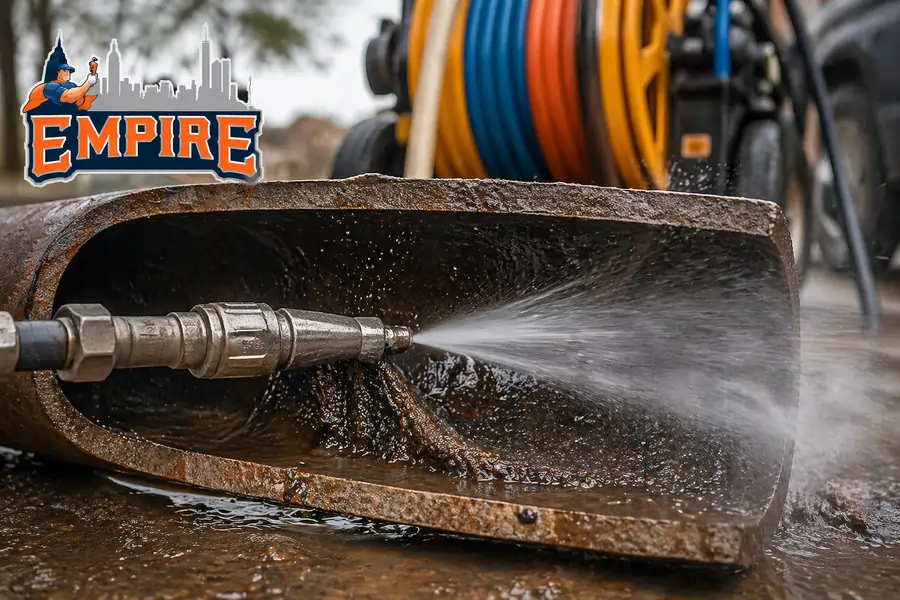
Hydro jetting is widely regarded as the most thorough drain cleaning method available today. It uses a specialized nozzle attached to a machine that delivers highly pressurized water – typically between 1,500 and 4,000 PSI – directly into the drain or sewer line. This high-pressure water blasts away grease, scale, roots, and debris from the pipe walls with remarkable efficiency.
Hydro jetting isn’t just effective for clearing clogs – it performs a true deep cleaning of the entire pipe interior. Water jetting is particularly useful for commercial kitchens, heavily used drain lines, and sewer pipes affected by root intrusion. Want to learn more about hydro jetting and whether it’s right for your pipes? Our detailed guide breaks it all down.
One important note: hydro jet cleaning should always be performed by a licensed plumber who first inspects the pipe. Using pressurized water in a damaged or corroded pipe can cause additional harm.
Drain Snaking (Plumbing Snake / Auger)
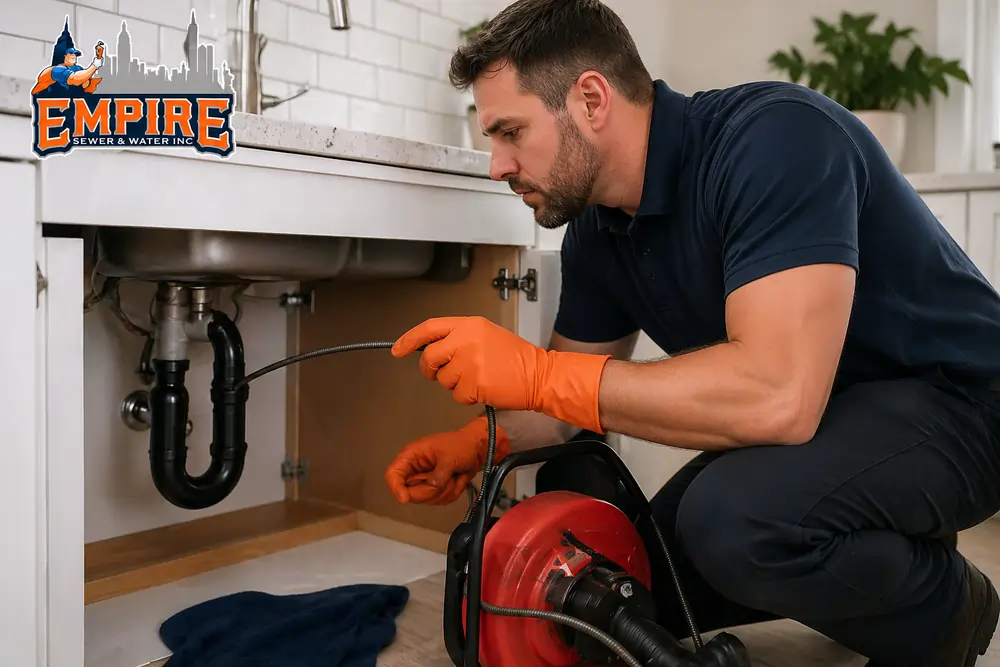
A drain snake – also called a plumbing snake or auger – is a flexible metal cable that a plumber feeds into the drain to physically break up or retrieve a clog. It’s one of the most commonly used tools in any plumber’s arsenal and works well for straightforward clogs caused by hair, soap buildup, or small obstructions.
A drain snake is effective for clearing clogs in sink drains, shower drains, and bathroom pipes. However, snaking is primarily a drain clearing tool – it breaks apart the immediate blockage but doesn’t clean the pipe walls the way a hydro jet does. For severe buildup or recurring clogs, snaking alone may not deliver a lasting result.
Sewer Camera Inspection
A sewer camera inspection involves inserting a small, waterproof camera attached to a flexible cable into the sewer line. This lets a plumber see the exact condition of the pipe in real time – identifying cracks, root intrusion, blockages, pipe corrosion, and more.
Camera inspection is often performed before and after a drain cleaning to confirm the problem and verify that the cleaning was successful. It removes guesswork entirely and allows the plumber to recommend the most appropriate cleaning method. For New York homeowners dealing with older cast iron or clay sewer lines, a camera inspection is strongly recommended before any major drain cleaning work begins.
Chemical Drain Cleaners (Pros & Cons)
Chemical drain cleaners are widely available at hardware stores and are often the first thing homeowners reach for when a drain clogs. They work by creating a chemical reaction that dissolves organic matter like hair, grease, and soap residue.
Pros of chemical drain cleaners:
- Inexpensive and widely available
- Works quickly on minor organic clogs
- No tools required
Cons of chemical drain cleaners:
- A chemical drain cleaner may damage or corrode older metal and galvanized pipes with repeated use
- Ineffective against root intrusion, mineral scale, or solid blockages
- Harmful to the environment and septic systems
- Does not perform drain cleaning – it only helps with clearing the clog
- Chemical drain openers are not a substitute for professional drain cleaning
What Causes Drain and Sewer Blockages?
Understanding what causes blockages helps you prevent them. Here are the most common culprits behind clogged drains and sewer line backups.
Grease Buildup
Grease is one of the leading causes of kitchen drain clogs. When hot grease is poured down the sink, it travels through the drain pipe in liquid form – then cools and solidifies on the pipe walls. Over time, grease accumulates into a thick layer that traps food particles and progressively clogs the drain line. Hydro jetting is the most effective drain cleaning method for eliminating grease buildup.
Hair and Soap Residue
In bathrooms, hair and soap residue are the primary culprits behind clogged drains. Hair binds together and combines with soap scum to form dense mats inside the shower drain or bathtub drain. These blockages are common and can usually be addressed with a drain snake or enzyme-based drain cleaning solutions.
Tree Roots in Sewer Line
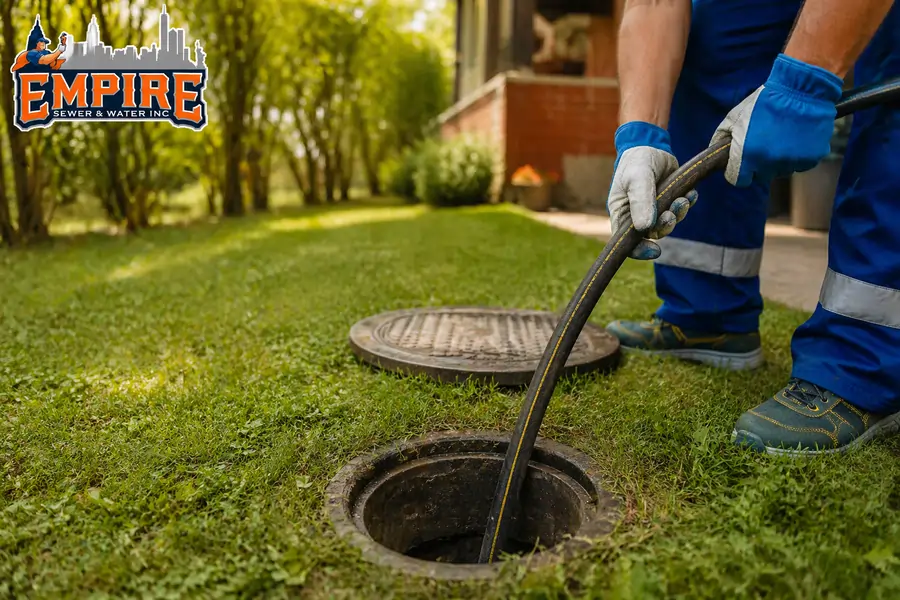
Tree roots naturally seek out moisture – and your sewer line is full of it. Small cracks or loose joints in older pipes provide an entry point for roots, which then grow and expand inside the sewer line, eventually causing a full blockage or pipe damage. Root intrusion requires professional sewer cleaning with hydro jetting and often a camera inspection to assess the extent of damage. This is one of the most serious drain and sewer issues New York homeowners face.
Pipe Corrosion
Older homes in New York often have galvanized steel or cast iron pipes that corrode from the inside over decades. Corrosion creates rough surfaces that trap debris and narrows the pipe diameter over time. Corroded pipes require careful attention – aggressive drain cleaning methods can worsen existing damage.
Foreign Objects
Accidental items – wipes, cotton balls, paper towels, toys, and hygiene products – frequently cause sudden blockages in drain lines. Unlike organic buildup, these objects don’t dissolve and must be physically removed. A plumbing snake or camera-guided retrieval is typically required.
Benefits of Professional Drain Cleaning Services
Investing in our professional drain cleaning service delivers benefits that go far beyond a clear drain. Here’s what maintaining a healthy plumbing system through routine drain cleaning actually means for your home.
Improves Water Flow
The most immediate benefit is restored water flow. After a professional drain cleaning, water moves through your pipes at full speed – no more slow-draining sinks, backed-up tubs, or waiting for the shower drain to catch up.
Prevents Future Clogs
By removing the buildup that leads to clogs, professional drain cleaning dramatically reduces the frequency of future plumbing problems. Clean pipe walls give debris nothing to cling to, which means clog formation slows significantly. This is why many plumbing experts recommend drain cleaning as a preventative service, not just a reactive one.
Extends Pipe Lifespan
Buildup, grease, and corrosive waste cause gradual damage to pipe walls over time. Regular sewer and drain cleaning removes these damaging materials before they have a chance to degrade your pipes. The result is a longer-lasting plumbing system that’s less likely to need costly repairs or replacements.
Protects Your Plumbing System
Your plumbing system is a network of interconnected drain lines and sewer lines. A blockage in one section creates pressure and stress across the entire system. Professional drain cleaning keeps every component working properly, reducing wear and strain on joints, seals, and pipe connections.
Reduces Emergency Plumbing Issues
Plumbing emergencies – burst pipes, sewage backups, complete blockages – are not random events. They almost always follow a period of neglected maintenance. Scheduling routine drain cleaning significantly reduces the likelihood of an after-hours emergency call. Emergency plumbing services cost considerably more than scheduled maintenance, making preventive drain cleaning one of the smartest investments a homeowner can make.
How Much Does Drain Cleaning Cost in New York?
Cost is one of the first questions homeowners ask, and understandably so. Here’s what you can realistically expect to pay for drain cleaning services in New York.
Average Price Ranges
| Service | Typical Cost Range |
|---|---|
| Basic drain snaking | $100 – $250 |
| Hydro jetting (residential) | $300 – $600 |
| Main sewer line cleaning | $350 – $800 |
| Sewer camera inspection | $150 – $400 |
| Emergency drain service | $200 – $500+ |
These are general estimates. Your actual cost will depend on several factors specific to your home and the severity of the drain issue.
Factors Affecting Cost (Severity, Method, Sewer Line Access)
Several variables influence the final price of a drain cleaning service:
- Severity of the blockage — a simple sink drain clog costs less than a main sewer line backup
- Cleaning method required — hydro jetting costs more than basic snaking but delivers superior results
- Accessibility — difficult-to-reach sewer lines or pipes behind walls increase labor time
- Location — urban properties in New York City may carry higher service rates than suburban areas
- Time of service — emergency drain services outside regular business hours carry additional fees
For a detailed breakdown, check out our sewer cleanout cost guide which covers pricing across different service types.
Hydro Jetting Cost vs. Snaking
Snaking a drain typically costs between $100 and $250, while hydro jetting runs $300 to $600 for residential service. While hydro jetting costs more upfront, it provides a far more thorough cleaning that lasts longer – making it the more cost-effective drain cleaning method over time, especially for homes with recurring clogs or grease-heavy drain lines.
Is Drain Cleaner Safe for Pipes?
This is one of the most frequently asked questions in residential plumbing – and the answer depends on the type of pipes in your home and how often you use chemical drain cleaners.
Chemical Drain Cleaner Risks
Chemical drain cleaners work by triggering a highly reactive chemical process inside your drain. The heat and caustic nature of these reactions can weaken pipe joints, warp PVC pipes, and accelerate corrosion in older metal pipes with repeated use. A drain cleaner may seem effective in the short term, but regular reliance on chemical drain treatments can quietly shorten the lifespan of your entire plumbing system.
Additionally, chemical drain cleaners are only effective against organic matter. They won’t clear a blockage caused by a solid object, mineral buildup, or root intrusion.
Safe Alternatives
There are effective alternatives to chemical drain cleaners that won’t harm your pipes:
- Bio-enzyme drain cleaners — use natural bacteria to break down organic waste without chemical reactions
- Baking soda and vinegar — a mild, DIY approach for very minor organic buildup
- Regular hot water flushing — helps prevent grease from solidifying in drain lines
- Professional hydro jetting or snaking — the safest and most effective option for serious drain issues
Impact on Galvanized Pipes
If your New York home has older galvanized pipes – common in pre -1970 construction – chemical drain cleaners pose a particular risk. Galvanized pipes are already prone to corrosion and rust buildup on the interior. Chemical drain treatments can accelerate this deterioration, increasing the risk of leaks or pipe failure. For homes with galvanized pipes, professional drain cleaning solutions that don’t rely on harsh chemicals are strongly recommended.
DIY vs. Professional Drain Cleaning – What Should You Choose?
Not every drain problem requires a professional. But knowing when to pick up the phone matters – especially in a city like New York where plumbing issues can escalate quickly in older building systems.
When DIY Works
DIY drain cleaning is reasonable in these situations:
- A single slow drain that only recently slowed down
- Hair buildup in a shower drain that can be removed with a drain tool
- A mild sink drain clog with no other symptoms
- Preventative maintenance using bio-enzyme treatments in clean pipes
For these minor cases, a basic plumbing snake or enzyme drain treatment can be a practical starting point.
When to Call a Professional Plumber
Call a plumber when:
- Multiple drains are slow or clogged at the same time
- You’ve tried DIY methods and the clog keeps coming back
- There are foul odors, gurgling sounds, or water backup in multiple fixtures
- You suspect a main sewer line blockage
- Your home has older pipes that could be damaged by aggressive cleaning
At these points, DIY cleaning methods can make the problem worse. A professional plumber has the training, equipment, and experience to identify the real issue and resolve it safely.
Risks of DIY Cleaning Methods
There are real risks to aggressive DIY drain cleaning:
- Over-using chemical drain cleaners damages pipes over time
- Improper use of a drain snake can scratch, puncture, or disconnect pipe joints
- Forcing a clog deeper into the drain line creates a more serious blockage
- Masking symptoms without addressing root causes leads to severe plumbing issues down the road
When in doubt, it’s always safer – and often cheaper in the long run – to schedule a professional drain cleaning appointment.
How Often Should You Clean Your Drains?
Drain cleaning isn’t just for emergencies. Building a routine maintenance schedule prevents the buildup that leads to bigger, costlier plumbing problems.
Routine Maintenance Schedule
Most residential plumbing experts recommend the following schedule for clean drains:
- Kitchen drains: Every 6–12 months, especially if you cook frequently
- Bathroom drains: Every 6–12 months for average households
- Main sewer line: Every 18–24 months as a general rule — though homes with trees nearby or older pipes may benefit from annual sewer cleaning
- Commercial properties: Every 3–6 months depending on usage volume
For a personalized timeline, see our guide on how often sewer lines need cleaning in NYC.
Residential vs. Commercial Needs
Residential drain cleaning needs differ significantly from commercial requirements. A family home with two bathrooms and a kitchen has moderate usage. A restaurant, apartment building, or office with dozens of daily users puts far more stress on drain lines — and demands a more aggressive routine cleaning schedule to avoid blockages and sewer services emergencies.
Preventative Drain Cleaning Tips
You can reduce the frequency of professional service calls by adopting a few simple habits:
- Use drain strainers in all sinks and showers to catch hair and debris
- Avoid pouring grease or cooking oils down any drain
- Run hot water for 30 seconds after each use of the kitchen sink
- Use bio-enzyme treatments monthly to break down organic buildup
- Schedule a professional drain cleaning at least once a year — don’t wait for a clog
Why Drain Cleaning Is Important for New York Homes
New York City’s unique infrastructure creates specific challenges for homeowners when it comes to drain and sewer maintenance. Understanding these local factors helps you stay ahead of plumbing problems before they become costly emergencies.
Older Plumbing Systems
A large portion of New York’s housing stock dates back to the early and mid-20th century. Many of these buildings still have original cast iron, galvanized steel, or clay sewer pipes that have been in service for 50 to 100 years. These older pipe materials are more prone to corrosion, scale buildup, and joint failures — making regular drain cleaning not just helpful but essential for maintaining a healthy plumbing system.
Urban Sewer Line Challenges
New York City’s complex underground infrastructure means sewer lines often run through congested terrain shared with water mains, gas lines, and subway infrastructure. The city’s combined sewer system can also create unique pressure dynamics, especially during heavy rainfalls when stormwater and sewage share the same lines. Sewer and drain cleaning services become particularly important in this environment to prevent backflow and sewer drain issues.
Seasonal Issues (Cold Weather Impact)
New York winters are hard on plumbing. Cold temperatures cause pipes to contract, which can widen small cracks and increase the risk of blockages. In some cases, outdoor sewer lines can freeze or become more vulnerable to root intrusion as trees and plants die back and decay. Scheduling a drain cleaning before winter — and again in early spring — is a smart preventative strategy for New York homeowners.
Professional Drain Cleaning Services in New York
At Empire Sewer and Water Inc, we provide complete sewer and drain cleaning services for residential and commercial properties across New York. Here’s what you can expect when you work with our team.
What to Expect from a Service
When our plumbers arrive for a drain cleaning appointment, they begin with a full assessment of your drain and sewer lines. We identify the blockage type, inspect accessible pipe sections, and recommend the appropriate cleaning method – whether that’s hydro jetting, drain snaking, or a combination of techniques. We explain every step clearly so you understand exactly what’s happening and why.
After completing the drain cleaning process, we verify the result – often using a camera inspection – to confirm that the pipes are fully clear and in good condition.
When to Schedule Drain Cleaning
Don’t wait for a full backup to schedule drain services. Call us when you notice:
- A sink drain, shower drain, or bathtub drain that’s moving slowly
- Recurring clogs in the same drain
- Gurgling sounds after flushing or running water
- Unpleasant odors rising from any drain in your home
- It’s been more than a year since your last professional drain cleaning
Emergency Drain Services
Drain emergencies don’t follow a schedule. If you experience a sewage backup, multiple clogged drains, or a main sewer line failure, Empire Sewer and Water Inc provides emergency plumbing services to resolve your drain issue fast. Don’t let a blockage turn into a flood – call our team as soon as you notice signs of a serious drain or sewer problem.
Frequently Asked Questions (FAQs)
What is drain cleaning?
Drain cleaning is the professional removal of buildup, grease, debris, and blockages from the interior walls of drain pipes and sewer lines. Unlike simply clearing a clog, drain cleaning restores the full interior of the pipe — improving water flow and preventing future plumbing issues.
Is drain cleaning the same as unclogging?
No. Unclogging – or drain clearing – removes the immediate obstruction so water flows again. Drain cleaning goes further by scrubbing the pipe walls and eliminating all accumulated buildup. Drain clearing is a short-term fix; drain cleaning and clearing together provide a complete, long-lasting solution. To learn the difference between drain clearing and drain cleaning in more detail, review the comparison section above.
How long does drain cleaning take?
Most residential drain cleaning appointments take between 1 and 2 hours. A simple sink drain cleaning may take as little as 30–45 minutes, while a full sewer line cleaning with camera inspection can take 2–3 hours. The time depends on the severity of the blockage, the length of the pipe, and the cleaning method used.
Can hydro jetting damage pipes?
Hydro jetting is safe for most modern pipe materials – including PVC, copper, and cast iron – when performed by a trained professional. However, pipes that are already cracked, corroded, or severely damaged may not withstand the force of pressurized water. This is why Empire Sewer and Water Inc always performs a camera inspection before recommending hydro jetting for older pipes. In the right conditions, hydro jetting is one of the safest and most effective drain cleaning solutions available.
How do I know if my main sewer line is clogged?
Signs of a main sewer line clog include: multiple drains backing up simultaneously, toilets gurgling when you run a sink or shower, sewage odors coming from floor drains, and water backing up into your bathtub when you flush the toilet. If you notice any of these symptoms, call a professional plumber immediately – a main sewer line blockage is a serious plumbing problem that can cause significant property damage if left unaddressed.