By a licensed plumbing professional with 15+ years in residential drain service | Last updated: 2026
| Quick Answer: For most household drain clogs, start with boiling water or the baking soda-and-vinegar method. If that does not work, grab a $4 Zip-It tool from the hardware store. It removes hair clogs in under two minutes and outperforms every chemical drain cleaner on the shelf. Deep blockages need a plumbing auger or professional hydro jetting. Read on for exactly which method works for which clog. |
Let me be direct with you: most drain clogs do not need a plumber. In 15 years of residential plumbing work, I would estimate that roughly 80% of the calls I have seen could have been handled at home with a couple of basic tools and a little patience. The other 20% are the deep line blockages, the root intrusions, the collapsed pipe sections, and those genuinely need professional equipment.
This guide walks you through the same diagnostic process I use on a job site. We will start with what is actually causing your clog, work through every proven clearing method from easiest to most involved, and give you clear signals for when to stop DIYing and make the call.
What Is Actually Blocking Your Drain?
Before you pour anything down the drain or reach for a tool, it helps to make an educated guess about what is in there. The fix that works on a grease clog does essentially nothing on a hair clog, and vice versa.
The Most Common Culprits, Ranked by How Often I See Them
- Hair and soap scum (bathrooms): The number one offender in bathroom sinks and showers. Hair tangles with soap residue and forms sticky, rope-like masses that grip the inside of the pipe. These rarely dissolve. They need to be physically removed.
- Grease and cooking fat (kitchens): Liquid when it goes down, solid by the time it hits the cold pipe 12 inches in. Grease clogs build gradually over months, which is why kitchen drains seem to fail suddenly. The narrowing has been happening for a while.
- Food particles: Even homes with garbage disposals accumulate small debris. Starchy foods like pasta and rice are particularly bad. They swell with moisture and form dense plugs.
- Soap scum and mineral deposits: Hard water leaves calcium and limescale deposits that coat pipe walls over time, gradually narrowing the pipe until flow slows to a trickle.
- Foreign objects: Cotton swabs, dental floss, wipes (yes, even flushable ones), and kids toys. I have pulled some remarkable things out of drains over the years.
- Tree roots (main sewer line only): Roots find moisture through tiny cracks in older pipes and grow inward. This is a job for professional equipment. Do not try to snake this yourself.
How to Read Your Drain’s Warning Signs
The behavior of your drain tells you a lot about what kind of blockage you are dealing with:
- Slow drain, no standing water: Partial blockage, probably buildup on pipe walls. Easiest to fix early.
- Standing water that eventually drains: More significant partial blockage. The baking soda method or a Zip-It tool should handle this.
- Water completely backed up: Full blockage. You need a plunger or a snake. Household remedies probably will not cut through this alone.
- Gurgling sounds from other fixtures: Shared venting issue or a main line blockage. Multiple fixtures gurgling simultaneously is a red flag that warrants a professional look.
- Sewage smell: Decomposing organic matter trapped in the pipe, or a dry P-trap. Run water in infrequently-used sinks to refill the trap seal.
- Water backing up into a different fixture: Classic main line indicator. When flushing the toilet backs water up into the tub, the clog is downstream from both fixtures.
Household Methods That Actually Work (Ranked by Effectiveness)
I want to be honest with you here: not every home remedy you will find on the internet is equally useful. Some are genuinely effective. Others are more folklore than fact. Here is my real-world assessment of each one.
1. Boiling Water: Best First Attempt for Kitchen Drains
| Best for: Grease and soap buildup in kitchen sinks. Not effective on hair clogs or anything involving solid debris. |
This is always my first suggestion for a kitchen drain that is running slow. Boiling water melts the fat deposits that accumulate on pipe walls and restores flow without any chemicals or tools. It costs nothing and takes two minutes.
How to do it:
- Boil a full kettle of water.
- Pour it directly into the drain in two or three stages, waiting about 10 seconds between each pour. This gives the hot water time to work on each layer of grease before more follows.
- Run the hot water tap for 30 seconds and check if the drain has cleared.
- Repeat once if it is still sluggish.
| Important: Skip boiling water if you have PVC pipes. The heat can soften joints over time. Use the hottest tap water instead, or let the boiling water cool for a few minutes before pouring. If you are not sure what type of pipes you have, go with very hot tap water. It is effective enough for most grease clogs. |
2. Baking Soda and Vinegar: The Most Reliable DIY Method
| Best for: Soap scum, light grease buildup, slow drains caused by general accumulation. Works well as a monthly maintenance routine. |
This is probably the single most useful technique in this entire guide, and it works better than most people expect, but only when done correctly. The fizzing reaction between baking soda and vinegar creates enough agitation to loosen buildup from pipe walls. It is not magic, and it will not dissolve a serious hair clog, but for the slow drains that creep up on you over time it is remarkably effective.
How to do it:
- If there is standing water, remove as much as you can with a cup or small bowl. The baking soda needs to reach the pipe, not dissolve in standing water.
- Pour one cup of baking soda directly into the drain. Use a spoon to push it past the drain cover if needed.
- Follow immediately with one cup of white vinegar.
- Cover the drain opening right away with a stopper or a folded cloth. This forces the fizzing action downward into the pipe rather than bubbling up and out, which is where most people lose the effectiveness of this method.
- Let it sit for at least 15 to 30 minutes. For stubborn buildup, let it work overnight.
- Flush thoroughly with a full kettle of hot water (or very hot tap water for PVC).
| Pro tip: I tell my customers to do this once a month on every drain in the house, kitchen, bathrooms, even the laundry sink. It takes five minutes and prevents the kind of buildup that turns into a real problem. |
3. Baking Soda and Salt: The Overnight Variation
| Best for: Soap buildup, bacterial slime, slow bathroom drains. Good for drains you can leave overnight. |
This variation works well when you have time to let it sit. Salt adds mild abrasive action and helps draw moisture out of the clog material, while baking soda handles the buildup on the pipe walls.
How to do it:
- Mix half a cup of table salt with half a cup of baking soda.
- Pour the dry mixture into the drain.
- Do not run any water. Let it sit for several hours or overnight.
- In the morning, flush thoroughly with boiling or very hot water, then run the hot tap for a full minute.
4. Dish Soap and Hot Water: The Kitchen Specialist
| Best for: Grease clogs in kitchen drains. Dawn or any degreasing dish soap works well. |
Dish soap is essentially a professional degreaser in a bottle. It is designed to break down cooking fats on dishes, and it does the same thing inside your drain pipe. Combined with hot water, it is one of the more effective home methods for kitchen clogs specifically.
How to do it:
- Squeeze a quarter to half a cup of dish soap directly into the drain.
- Let it sit for five minutes to coat the pipe walls.
- Slowly pour a full kettle of boiling water after the soap.
- Follow up with hot tap water for 60 seconds.
Physical Methods: What to Use When Remedies Are Not Enough
If household remedies have not cleared the drain after a couple of attempts, you need a physical method. These are consistently more effective than any liquid or chemical approach for significant clogs, because they actually remove the blockage rather than trying to dissolve it. To understand more about what professional drain cleaning involves at a technical level, our overview guide covers the process in detail.
| Method | Best For | Depth Reach | Skill Level |
| Cup Plunger | Any drain with standing water | Shallow to mid-pipe | Beginner |
| Zip-It / Plastic Snake | Hair in bathroom/shower drains | 1 to 2 feet | Beginner |
| Plumbing Auger | Deep blockages, stubborn clogs | 15 to 25 feet | Intermediate |
| P-Trap Cleaning | Under-sink debris buildup | P-trap area | Intermediate |
The Plunger (Most People Use It Wrong)
A plunger is one of the most effective drain-clearing tools ever made, and it is also one of the most misused. The goal is suction, not just force. If you are not creating a proper seal, you are just splashing water around.
| Use a cup plunger (flat bottom) for sinks, tubs, and showers. The flange plunger, the one with the rubber extension at the bottom, is for toilets only. Using the wrong type dramatically reduces effectiveness. |
The correct technique:
- Fill the sink or tub with enough water to cover the plunger cup. You need water, not air, in the cup to create suction.
- If you have a double sink, stuff a wet rag firmly into the second drain. Air pressure will follow the path of least resistance, and you need to block that path.
- Press the plunger cup directly over the drain and push down firmly to create a seal before you start plunging.
- Use firm, rhythmic strokes, 15 to 20 of them. Do not break the seal between strokes.
- Pull up sharply on the final stroke to generate a burst of suction.
- Check if the drain runs freely. Repeat 3 to 5 rounds before moving on.
| Pro tip from the field: A thin ring of petroleum jelly around the plunger rim dramatically improves the seal, especially on older sink drains where the surface is not perfectly flat. |
The Zip-It Tool: The Best $4 You Will Spend on Home Maintenance
If I could recommend exactly one tool for the average homeowner to keep under the bathroom sink, it would be the Zip-It plastic drain snake. It is a barbed plastic strip about 18 inches long, costs around $4 at any hardware store, and it physically removes hair clogs more effectively than any chemical product on the market.
Hair clogs do not dissolve. They need to be extracted. That is what this tool does.
How to use it:
- Remove the drain stopper or cover if possible.
- Insert the Zip-It into the drain opening and push it in gently. Do not force it.
- Twist slowly as you push deeper. The barbs grab hair and debris as you rotate.
- When you feel resistance, you have found the clog. Keep twisting to hook it onto the barbs.
- Pull the tool out slowly and steadily. The barbs drag the hair mass out with it.
- It is unpleasant. Do it anyway. Dispose of the debris, repeat until nothing more comes out.
- Flush with hot water.
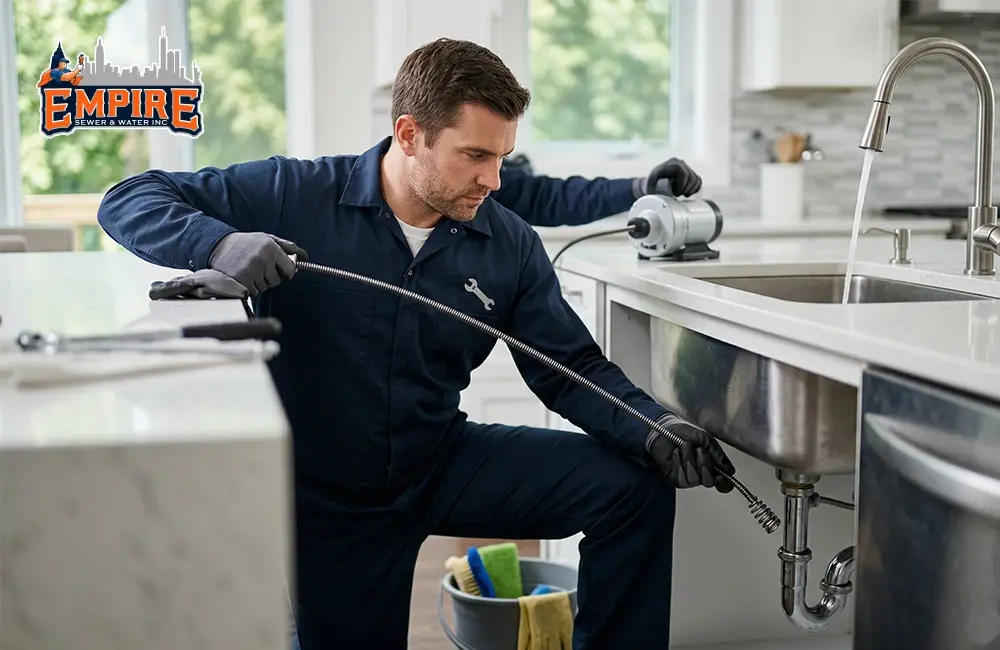
The Plumbing Auger (Drain Snake): For Deep Clogs
When a clog is past the P-trap and further into the pipe, you need a plumbing auger. This is a flexible metal cable, typically 15 to 25 feet long, that can reach deep into the drain line to either break up or retrieve the blockage.
These cost around $25 to $50 at a hardware store, or you can rent one for a few hours if you would rather not buy. They are not complicated to use, but they do require a bit of patience.
How to use it:
- Put on rubber gloves. The cable picks up everything inside the pipe.
- Remove the drain cover or stopper.
- Feed the cable end into the drain opening until you feel resistance.
- Turn the crank handle clockwise to push through the blockage or to hook the clog material.
- Once you have broken through or hooked the clog, continue cranking while slowly pulling the cable back out.
- Pull any retrieved debris clear of the drain and dispose of it.
- Run hot water for 2 to 3 minutes to flush remaining debris and confirm the line is clear.
- If water still drains slowly, feed the snake back in and repeat.
Cleaning the P-Trap: The Direct Approach
The P-trap is the curved pipe section directly under the sink. That U-shape is intentional. It holds a small amount of water that blocks sewer gases from entering the home. But it is also exactly where grease, food debris, and other material tends to settle.
Cleaning it directly is sometimes the most efficient solution, especially for kitchen sinks that have been running slowly for a while despite other interventions.
What you will need: A bucket, rubber gloves, and a wrench (maybe).
- Clear out the cabinet under the sink and position a bucket directly under the P-trap.
- Unscrew the slip nuts on both ends of the P-trap by hand, or use a wrench if they are stubborn. Turn counterclockwise.
- Remove the P-trap. Water and debris will empty into the bucket.
- Check the pipe going into the wall for additional buildup. Use a smaller snake to clear it further if needed.
- Rinse the P-trap thoroughly, either in another sink or outdoors.
- Reinstall, tightening the slip nuts firmly by hand. Do not over-tighten or you risk cracking the fitting.
- Run water and check under the sink for any drips.
Deep Pipe Blockages: When Standard Methods Will Not Reach
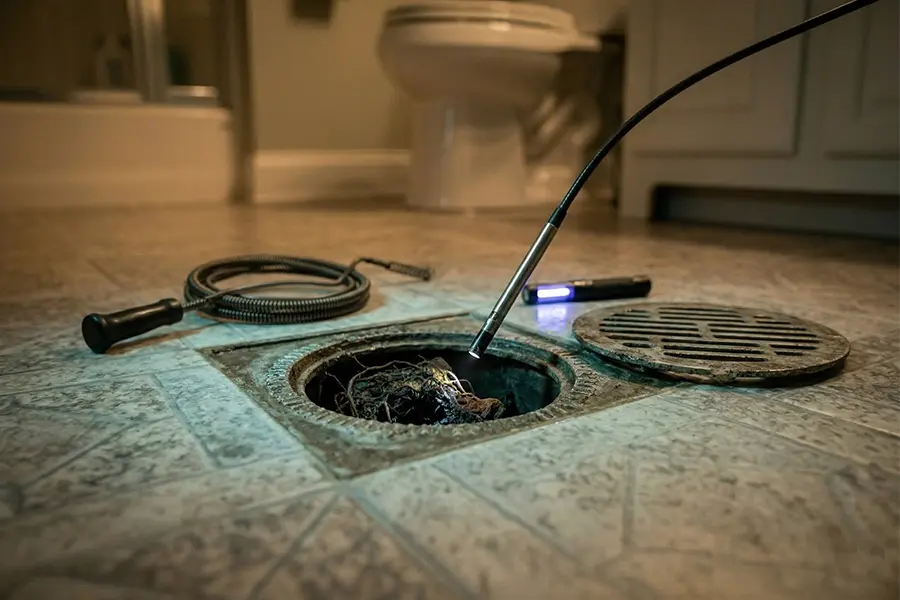
A deep clog means the blockage is well past the P-trap, possibly 10, 15, or 20 or more feet into the drain line. These require a different approach and, depending on the cause, may need professional equipment.
Signs You Are Dealing With a Deep Blockage
- Multiple drains in the house are slow or backed up simultaneously
- Plunger, Zip-It, and a standard household snake have all failed
- Flushing the toilet causes water to appear in the bathtub or shower
- Gurgling from drains in other rooms when you run water
- Complete stoppage with no water flowing at all
Using a Longer Auger for Deep Access
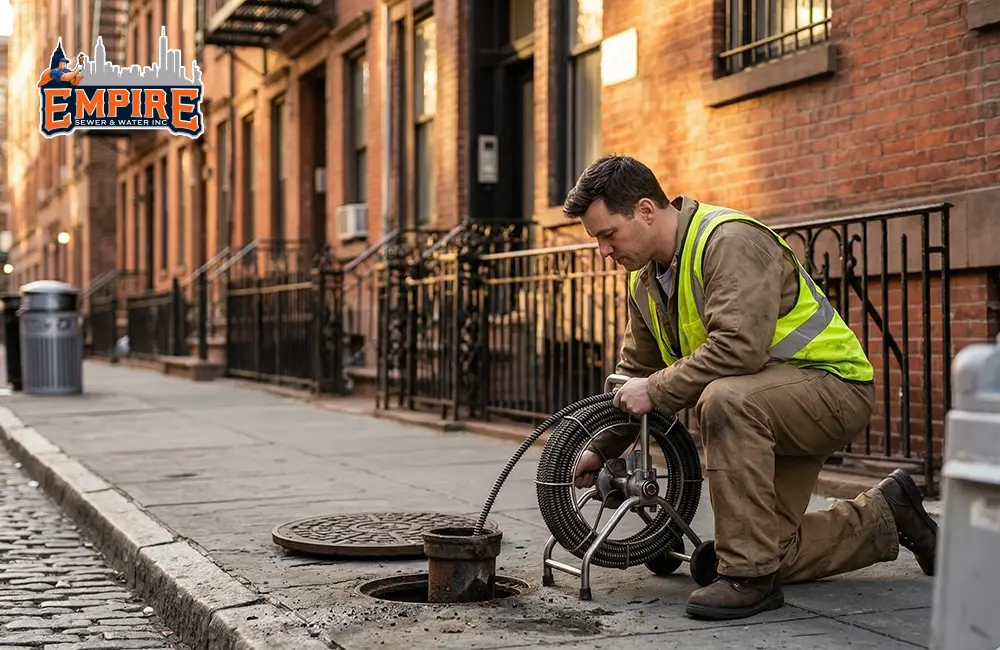
For deep blockages, you need a minimum 15-foot auger, ideally 25 feet. If your home has a clean-out plug, which is a capped fitting usually found under the sink, in a crawl space, or near the exterior foundation, removing it gives you direct access to the main drain line without feeding the snake through the drain opening.
Feed the cable slowly, maintain steady clockwise pressure on the crank, and do not force it if you feel heavy resistance. You can damage older pipe joints with excessive force. If you are unsure what the sewer cleanout cost looks like for a professional service call, our breakdown covers both DIY and pro pricing.
Hydro Jetting: What Professionals Use
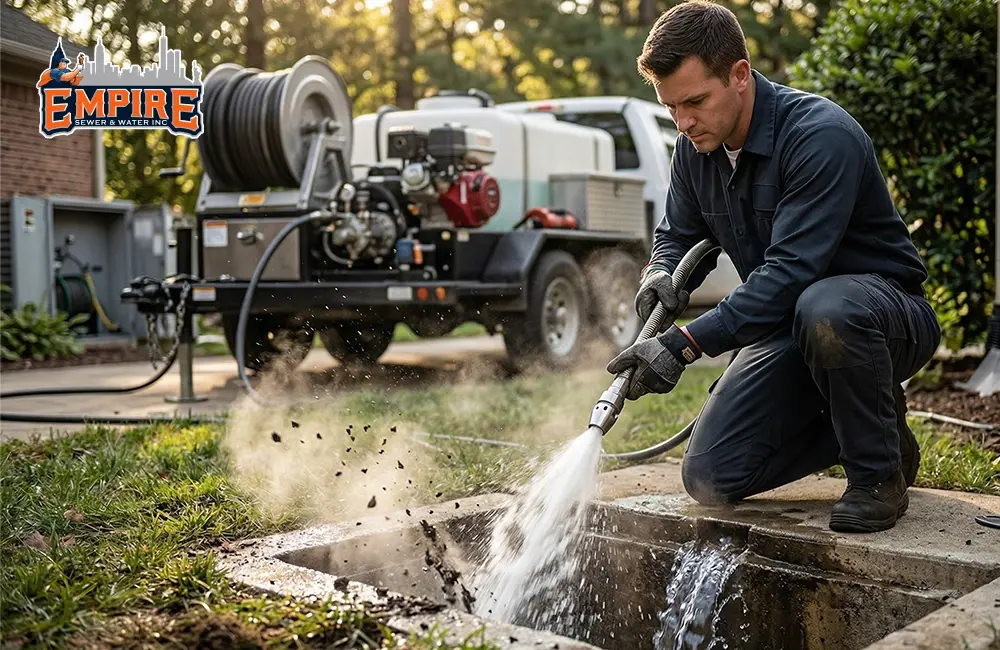
When DIY methods fail on a recurring or deep blockage, hydro jetting is the professional solution. A hydro jetter sends a pressurized water stream up to 4,000 PSI into the pipe from a specialized nozzle, effectively scouring the entire interior diameter clean. It does not just punch a small hole through the clog the way a snake does. It restores the pipe to near-original flow capacity.
Our hydro jet drain cleaning cost guide walks through what to expect to pay, what the service covers, and when it makes more financial sense than repeated snaking.
Sewer Camera Inspection: When You Do Not Know What You Are Dealing With
If a drain keeps blocking despite clearing, or if you are buying an older home, a sewer camera inspection takes the guesswork out of it. A waterproof camera feeds into the drain line and gives a real-time visual of what is inside. That might be grease buildup, root intrusion, pipe corrosion, or a collapsed section. Diagnosing first saves money compared to clearing a line multiple times without fixing the underlying problem.
The Right Method for Each Type of Drain
What works in the kitchen does not always work in the bathroom, and what clears a shower drain will not help with a main line blockage. Here is a drain-by-drain breakdown.
Kitchen Sink Drain
Kitchen clogs are almost always grease and food debris. Start with boiling water and dish soap. If that does not fully clear it, try the baking soda and vinegar method. For persistent blockages, go straight to P-trap cleaning. Kitchen P-traps accumulate grease faster than any other drain in the home. For commercial kitchens or homes with heavy cooking activity, our grease trap cleaning service handles higher-volume grease buildup that goes beyond what residential methods can address.
Bathroom Sink Drain
Bathroom sink clogs are nearly always hair and soap scum. Skip the liquid remedies on this one and go straight to the Zip-It tool. It physically removes the hair mass rather than trying to dissolve it. After clearing the bulk of the clog, follow up with baking soda and vinegar to dissolve the soap residue left on the pipe walls.
Shower Drain
Shower drains accumulate hair, body wash residue, and shampoo buildup. Before using any tool, remove the drain cover and look inside. There is often a significant hair mass right at or just below the surface that you can pull out with a gloved hand. That five-second step alone sometimes fully clears the drain. Follow with the Zip-It tool for anything deeper, then flush thoroughly with hot water.
Main Drain Line
Main line blockages affect multiple fixtures simultaneously and almost always require professional intervention. DIY methods do not have the reach or power to address blockages this deep. If you are seeing water backing up from one fixture when you use another, or if three or more drains are slow at once, it is time to call a professional. Our sewer line cleaning service uses industrial-grade equipment to clear main line blockages the right way, and our emergency drain cleaning team is available when it cannot wait.
Wondering how often your main line should be professionally serviced to avoid these situations? Our guide on how often sewer lines should be cleaned gives specific recommendations based on home age, tree coverage, and usage patterns.
Why I Do Not Recommend Chemical Drain Cleaners
I get asked about products like Drano constantly, and my answer is consistent: I do not recommend them for regular use.
Chemical drain cleaners work through a highly exothermic reaction. They generate heat to dissolve or break down clog material. That heat is hard on pipes, particularly PVC, which can soften and warp over time with repeated exposure. On older metal pipes, the caustic chemicals accelerate corrosion. Beyond the pipe damage, chemical cleaners typically punch a small hole through the clog rather than clearing it completely, which means the drain will slow down again quickly.
There is also a practical safety concern: if the chemical cleaner does not work and you then try to plunge or snake the drain, you risk splashing caustic liquid on your skin, eyes, and clothes.
The household methods in this guide are safer for your pipes, safer for you, and more consistently effective on the types of clogs most people actually deal with. For a deeper look at what professional drain cleaning actually involves and how it compares to DIY approaches, our service overview explains the process.
What About Enzyme-Based Cleaners?
Enzyme cleaners are a reasonable middle ground. They use live bacteria to biologically break down organic material inside the pipe, and they are safe for all pipe types. The trade-off is time: they work over days to weeks, not minutes. They are excellent for ongoing maintenance but will not clear an active clog. Use them after you have cleared a blockage to prevent recurrence.
Common Questions Answered Directly
What is the fastest way to clear a blocked drain?
For a kitchen drain, boiling water poured in stages can work in minutes. For a bathroom drain clogged with hair, the Zip-It tool is faster than any other method, usually under two minutes once you have it in hand. For a completely backed-up drain, a plunger used correctly is the fastest non-tool approach.
Does Dawn dish soap actually work on clogged drains?
Yes, on grease clogs specifically. Dawn is a degreaser and lubricant. Pour half a cup into the drain, let it sit for five minutes, then follow with a full kettle of boiling water. It breaks up fat deposits along the pipe walls effectively. It will not do anything for a hair clog, and it will not clear a deep blockage, but for a greasy kitchen drain it is genuinely useful.
Why does my drain keep clogging every few weeks?
Recurring clogs after clearing usually mean one of three things: the clog was not fully removed (just partially broken up), there is underlying buildup on the pipe walls that keeps catching new debris, or there is a structural issue such as root intrusion, partial pipe collapse, or significant mineral scaling. If you have cleared a drain properly and it clogs again within a month or two, it is worth getting a sewer camera inspection rather than continuing to clear it repeatedly.
When should I stop trying to fix it myself?
Stop and call a professional when multiple drains are affected at the same time, when sewage or water is backing up from a fixture, when you have tried every method here without improvement, when there is a sewage smell throughout the home that does not clear, or when you notice water staining or moisture around drain areas. These are signs the problem is beyond what household tools can address. Our drain cleaning professionals and emergency sewer team are available for exactly these situations.
Are flushable wipes really okay to flush?
No. Despite the labeling, flushable wipes do not break down in drain pipes the way toilet paper does. They are a leading cause of sewer blockages in residential and municipal systems. Dispose of them in the trash.
When to Call a Plumber: Clear Signals
Most homeowners can handle the majority of drain clogs themselves. But there are specific situations where pushing forward without professional help risks turning a $50 fix into a $500 one. Call a plumber when you see:
- Multiple drains affected simultaneously: Main line issue that requires professional-grade equipment.
- Sewage backing up into fixtures: Do not delay on this one. Main sewer backup can cause significant damage quickly.
- The same drain clogging repeatedly within weeks: Underlying structural or accumulation issue that clearing alone will not solve.
- Persistent sewage odor throughout the home: May indicate a broken P-trap, cracked pipe, or sewer backup. Each requires professional inspection.
- No improvement after using a plunger, Zip-It, and a drain snake: The blockage is either too deep or too compacted for standard DIY tools.
- Moisture staining or soft material around drain areas: Possible pipe joint failure or leak. Stop using that drain and get it looked at.
Prevention: The 2-Minute Weekly Routine That Eliminates Most Drain Problems
The most effective drain maintenance is not reactive. It is preventative. These habits cost almost nothing and eliminate the majority of drain clogs before they happen.
What Should Never Go Down Any Drain
- Grease, cooking oil, or fat: let it solidify and dispose in the trash
- Coffee grounds: they accumulate in P-traps without dissolving
- Eggshells: shell fragments adhere to grease and accelerate buildup
- Pasta, rice, bread, or starchy foods: these swell with moisture and create dense plugs
- Flushable wipes: they do not break down in drain pipes
- Cotton balls, swabs, and dental floss: these tangle and create dense blockages
- Hair: use a drain guard to catch it before it enters the pipe
A Simple Weekly Routine That Works
- Run hot water for 30 to 60 seconds down all drains after any significant sink use. This flushes residue before it has a chance to settle and harden.
- Once a week, pour half a cup of baking soda into each drain followed by hot water. Two minutes of effort that keeps soap and grease from building up on pipe walls.
- Once a month, run the full baking soda and vinegar method on all drains, even the ones that seem fine. Proactive clearing prevents gradual buildup from becoming a real clog.
- Use drain guards in every shower, bathtub, and kitchen sink. Empty them weekly. A full drain guard is worse than no drain guard.
Quick Reference: Best Method by Clog Type
| Clog Situation | Start Here | If That Does Not Work |
| Kitchen grease clog | Boiling water + dish soap | Baking soda and vinegar, then P-trap cleaning |
| Bathroom hair clog | Zip-It plastic snake | Plunger, then baking soda and vinegar |
| Shower drain blockage | Remove by hand + Zip-It | Plunger, then drain auger |
| Deep pipe blockage | Plumbing auger (drain snake) | Professional hydro jetting |
| Multiple drains affected | Call a plumber | Main line service required |
| Recurring clogs within weeks | P-trap cleaning + monthly maint | Professional inspection and hydro jetting |
Final Thoughts
Drain clogs are one of those household problems that feel urgent but are almost never actually urgent, which means you have time to do it right. Start with the simplest, cheapest method and work your way up. Boiling water costs nothing. The baking soda method costs under a dollar. A Zip-It tool costs $4 and handles the majority of bathroom drain clogs most people ever encounter.
Save the professional call for the situations where DIY methods genuinely cannot reach the problem. The warning signs for those situations are specific enough that you will recognize them: multiple fixtures affected, sewage backing up, no progress after running through every method in this guide. When those conditions show up, the call is the right move.
For everything else, the methods above work. They are the same approaches I use on service calls, adapted for homeowners who want to handle it themselves.
| If you are in the New York area and need professional help, Empire Sewer and Water offers drain cleaning services, hydro jet drain cleaning, sewer camera inspections, and emergency sewer and drain service for residential and commercial properties. Contact us today for a free estimate. |