Sewer cleanout installation cost is one of those topics that surprises homeowners — often at the worst possible moment. You’re dealing with a sewage backup, a plumber is at your door, and suddenly you’re hearing numbers you weren’t prepared for. This guide removes that uncertainty before it happens.
Sewer cleanout installation costs between $1,400 and $3,500 nationally. In New York City and the surrounding metro area, expect to pay $2,000 to $5,500, depending on pipe depth, cleanout type, and whether excavation hits concrete, asphalt, or rocky soil. If your home already has a cleanout in place, line cleaning alone runs $150 to $600 through a drain snake or hydro jetting service.
Below, you’ll find a full cost breakdown by cleanout type, every factor that shifts the price, and what New York homeowners specifically should know before calling a plumber.
What Is a Sewer Cleanout and Why Does Installation Cost What It Does?
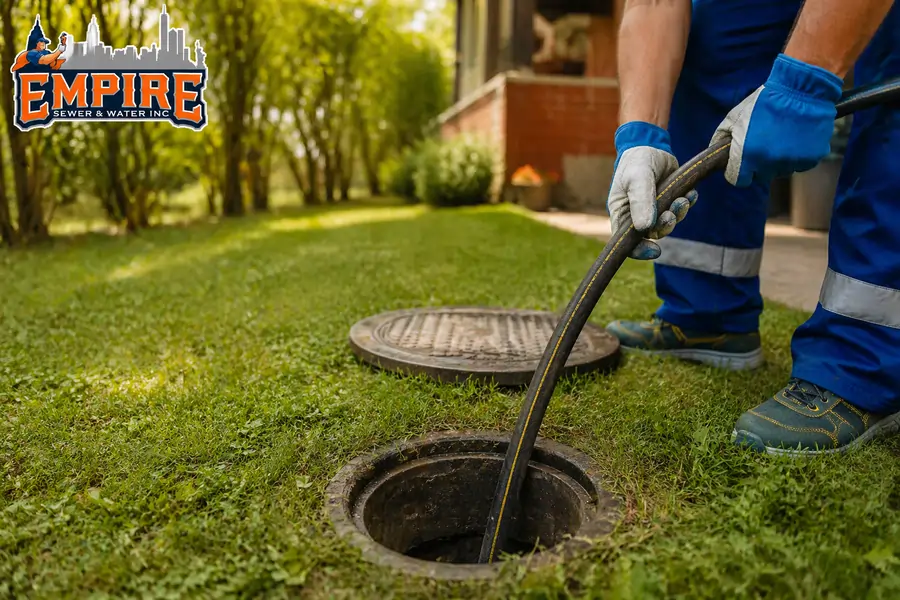
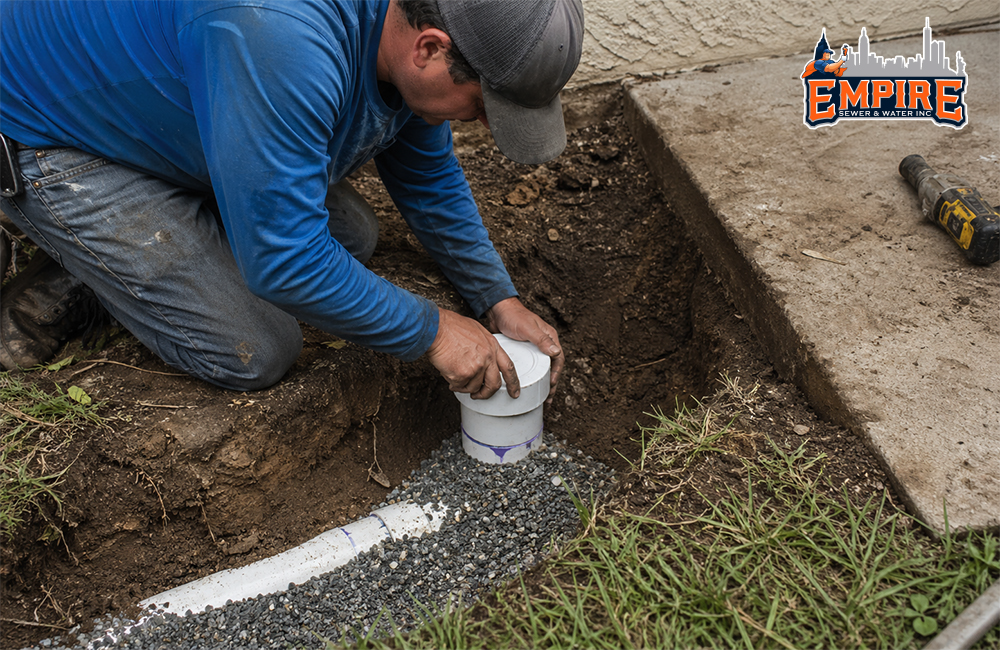
A sewer cleanout is a capped PVC or cast iron pipe fitting that connects to your home’s lateral sewer line, providing direct access for cleaning, inspection, and emergency clearing. It is typically 3 to 6 inches in diameter and sits at or just above ground level, usually near your home’s foundation, in the basement, or between the house and the sidewalk.
The installation cost reflects the labor and complexity involved in reaching your sewer line. A plumber must locate the lateral sewer pipe, excavate down to it (often 3 to 8 feet in New York), cut into the existing pipe, fit and seal the cleanout assembly, backfill the excavation, and restore the surface. Each of those steps adds time and materials, which is why even a “simple” installation takes four to eight hours and carries a meaningful price tag.
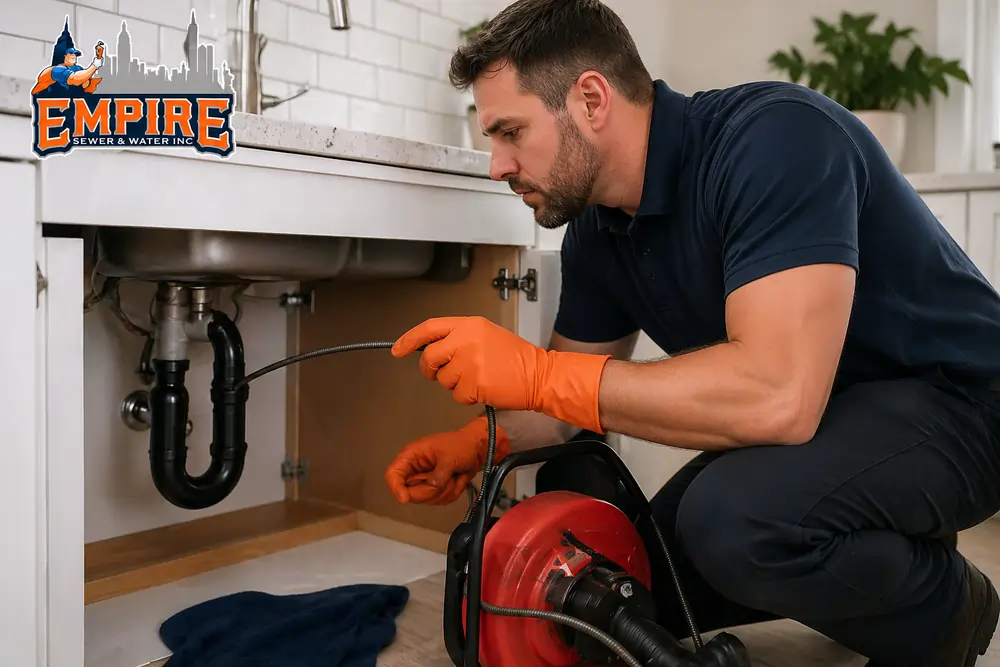
Without a cleanout, plumbers must access the sewer line through toilets, sinks, or roof vents — all of which limit equipment reach and effectiveness. That limitation turns a $200 snaking job into a far more expensive and disruptive service call. The installation cost, viewed that way, is also a long-term maintenance investment.
Average Sewer Cleanout Installation Cost in 2026
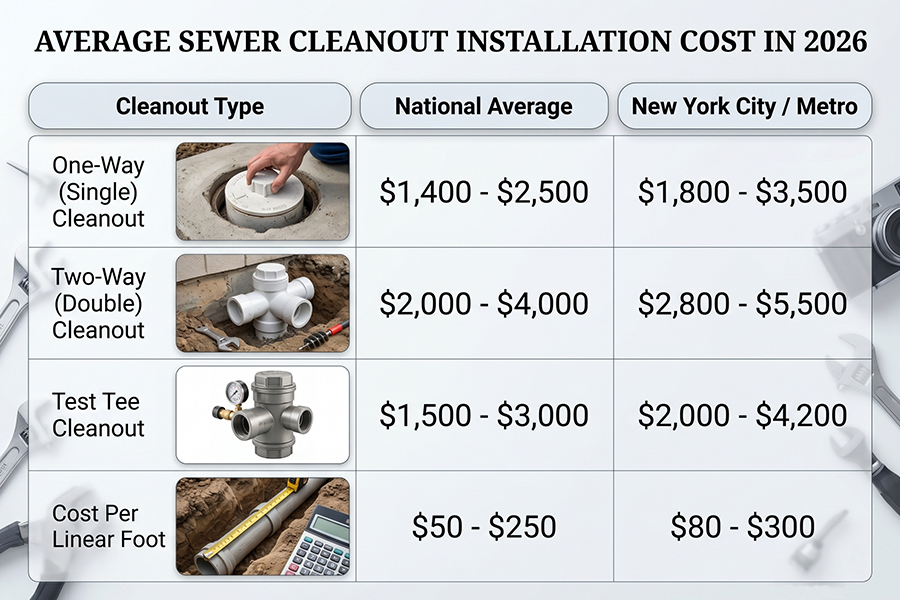
Sewer cleanout installation cost varies by cleanout type, geographic location, and site conditions. The table below shows current national averages alongside New York-specific pricing based on 2026 market data.
| Cleanout Type | National Average | New York City / Metro |
|---|---|---|
| One-Way (Single) Cleanout | $1,400 – $2,500 | $1,800 – $3,500 |
| Two-Way (Double) Cleanout | $2,000 – $4,000 | $2,800 – $5,500 |
| Test Tee Cleanout | $1,500 – $3,000 | $2,000 – $4,200 |
| Cost Per Linear Foot | $50 – $250 | $80 – $300 |
New York pricing runs higher for a consistent set of reasons: labor rates for licensed master plumbers in NYC are above the national average, permit requirements are more involved, and urban excavation frequently encounters concrete slabs, asphalt driveways, or rocky subsurface conditions that add significant time and equipment cost.
Cost Per Component (NYC Breakdown)
Understanding what you’re paying for helps you evaluate quotes and spot anything missing. Here is how installation costs typically break down for a New York project:
| Cost Component | Estimated Range (NYC) |
|---|---|
| Plumber labor ($150–$300/hr, 4–8 hours) | $600 – $2,400 |
| Excavation (manual or backhoe) | $300 – $800 |
| PVC cleanout fitting and cap | $30 – $120 |
| Backfill and site restoration | $100 – $400 |
| NYC plumbing permit | $100 – $350 |
| Concrete or asphalt cutting (if required) | $200 – $700 |
| Total (New York City) | $2,000 – $5,500 |
A common real-world scenario in Brooklyn or Queens: the sewer line sits 5 feet down beneath a concrete patio, requires a backhoe, a DOT permit for sidewalk access, and concrete restoration. That job starts around $4,000 and can exceed $5,500 without difficulty.
Types of Sewer Cleanouts and Their Installation Costs
The three types of sewer cleanouts differ in how they connect to your sewer line, which direction they allow access, and how useful they are for ongoing maintenance. Choosing the right type at installation time matters because retrofitting later costs more.
One-Way (Single) Sewer Cleanout: $1,400 – $2,500 Nationally
A one-way cleanout connects to the lateral sewer line at a 45-degree angle, providing access in a single direction, typically toward the municipal main sewer. When a plumber runs a drain snake through a one-way cleanout, the equipment travels toward the street, which addresses the most common blockage zone.
One-way cleanouts are less expensive than two-way models and sufficient for homes where blockages consistently occur between the house and the city connection. Their limitation is that they cannot reach blockages on the house side of the fitting, which can require additional access points or fixture removal in some situations.
Two-Way (Double) Sewer Cleanout: $2,000 – $4,000 Nationally
A two-way cleanout is the most commonly recommended option for residential installations. It features two pipe fittings installed adjacent to each other, angled in opposite directions, so a plumber can access both the street-side and the house-side of the sewer line from a single cleanout location.
For most New York homeowners, particularly those with older homes, tree-lined streets, and long lateral sewer runs, a two-way cleanout is the more practical long-term investment. The higher upfront cost is offset by not needing a second cleanout or fixture removal during future service calls.
Test Tee Cleanout: $1,500 – $3,000 Nationally
A test tee connects to the sewer line at a 90-degree angle, typically used where the pipe transitions direction or inside walls. The perpendicular connection makes it harder to maneuver drain snaking equipment into the line, which is why test tees are generally used during new construction for system testing, not as the primary maintenance access point.
If an older New York home has only a test tee as its cleanout, a plumber may recommend adding a one-way or two-way cleanout alongside it to improve access for ongoing maintenance.
What Factors Affect Sewer Cleanout Installation Cost in New York?
Sewer cleanout installation cost shifts based on several site-specific variables. National averages provide a starting point, but New York homeowners should understand the local factors that push jobs to the higher end of the range.
Depth of the Sewer Line
Sewer lines in New York are buried deeper than the national average in many neighborhoods, often 4 to 8 feet underground, because frost depth requirements and decades of street work have pushed them down over time. According to Angi’s 2026 data, depth is one of the most significant cost drivers: excavation for a shallow line (2 to 3 feet) costs far less than for a deep line (6 to 8 feet), which requires more labor, potential shoring, and sometimes a mechanical excavator rather than hand digging.
Each additional foot of depth adds excavation time, equipment use, and safety setup costs. In practical terms, a job at 3 feet might take a crew half a day; at 7 feet, it can take a full day with a backhoe.
Pipe Material and Condition
New York has a significant stock of pre-1980 housing, and many of those homes have clay tile, cast iron, or Orangeburg sewer pipes still in place. Orangeburg pipe, a compressed tar and wood pulp product used from the 1860s through the 1970s, has a rated lifespan of 30 to 50 years. Clay pipe is brittle and prone to joint separation. Both materials require careful handling during excavation and fitting; rough cutting or heavy-handed installation can crack or collapse the existing pipe, turning a cleanout installation into a partial sewer line repair.
PVC pipe, common in homes built after 1980, is far more accommodating. It cuts cleanly, accepts fittings easily, and rarely fails during an installation. When a plumber encounters clay or Orangeburg during excavation, expect the estimate to rise by $500 to $1,500 to account for the additional care, and possibly for spot repairs discovered in the process.
Excavation Obstacles: Concrete, Asphalt, and Pavement
In New York City especially, the sewer line may run beneath a concrete driveway, poured-in-place patio, or a city sidewalk. Cutting through concrete or asphalt adds $200 to $700 to the project for a typical residential job, and surface restoration (patching or repaving) adds to that. If the cleanout must be placed near or under a public sidewalk, a New York City Department of Transportation (DOT) permit is required in addition to the standard plumbing permit, which adds both cost and scheduling lead time.
Permit Requirements in New York
Sewer cleanout installation in New York City requires a plumbing permit and must be performed by a licensed master plumber. NYC Department of Buildings (DOB) plumbing permits for residential work typically cost $100 to $350. In Nassau County, Suffolk County, and Westchester, permitting structures differ by municipality, so always confirm with your plumber what permits apply to your specific address.
Unpermitted sewer work in NYC creates real problems: fines, required demolition of the unpermitted work, and potential liability complications during a home sale. Any plumber who suggests skipping the permit should be considered a significant risk.
Distance from House to City Sewer Main
The lateral sewer line that connects your home to the city main varies in length. In a dense urban neighborhood, it may be 20 to 40 feet; in a larger suburban lot, it can exceed 100 feet. Because installation is often quoted per linear foot, a longer lateral means more excavation and higher cost. HomeGuide’s 2026 cost data puts the per-linear-foot range at $50 to $250 nationally and $80 to $300 in the New York metro area.
Rocky Soil
Parts of the Bronx, Staten Island, and northern Queens sit on bedrock or rocky subsurface conditions. When excavation hits rock, the cost can increase by $500 to $2,000 depending on the volume that needs removal. Plumbers may need jackhammering equipment or specialty excavation, which adds both time and equipment rental costs.
Is a Two-Way Sewer Cleanout Worth the Extra Cost?
A two-way sewer cleanout is worth the additional upfront cost for most New York homeowners because it provides complete access to the entire lateral sewer line, reducing future service costs and emergency response time.
Here is the practical case: a one-way cleanout gives access toward the street. If the blockage is on the house side of the fitting (between the cleanout and the home’s foundation), the plumber still cannot reach it through the cleanout. At that point, you’re paying for fixture removal or additional excavation. A two-way system eliminates that scenario. Over the life of the home, the $500 to $1,500 difference in upfront installation cost is typically recovered within one or two future service calls.
Do You Need a Permit to Install a Sewer Cleanout in New York?
Yes. Sewer cleanout installation in New York City requires a plumbing permit issued by the NYC Department of Buildings, and the work must be performed by a master plumber licensed in New York City. Permit fees range from $100 to $350 for most residential projects. Municipalities outside the five boroughs (Long Island, Westchester) have their own permitting requirements, which your plumber should confirm before work begins.
Attempting this work without a permit risks fines, required removal of the unpermitted installation, and documentation problems during property transactions.
How to Find Out If Your Home Has a Sewer Cleanout
Your home likely has a sewer cleanout if it was built after 1980. Homes built before the mid-1980s, particularly brownstones, pre-war buildings, and older single-family homes common across New York City and Long Island, were frequently built without external cleanouts because plumbing codes at the time did not require them.
To locate yours, check these spots: the exterior of the home near the foundation, the basement floor along the main drain pipe, the front yard between the house and the sidewalk, and just inside or outside the property line near the curb. The cleanout cap is typically white or black PVC, 3 to 4 inches wide, or a steel cap on older homes. If you cannot locate one visually, a plumber can use a sewer camera inspection or pipe locator to determine whether a cleanout exists and where the lateral sewer line runs.
If no cleanout is found, a plumber may recommend installing one before or during any sewer line service, since working without one significantly limits what can be done and at what cost.
How Long Does Sewer Cleanout Installation Take?
Sewer cleanout installation typically takes four to eight hours for a standard residential job. The timeline extends to one to two full days when the project involves deep excavation, rocky soil, concrete cutting, or a longer lateral line.
Here is what happens during that time: the plumber first locates the sewer line using a camera or locator, marks the excavation zone, pulls the required permit (or confirms it was pre-pulled), excavates to the line, cuts in the cleanout fitting, tests the connection for watertightness, backfills the excavation, and restores the surface. Each phase has its own variable timing based on soil conditions and site obstacles.
How to Save Money on Sewer Cleanout Installation
Sewer cleanout installation cost can be managed with the right approach. These strategies reduce what you pay without cutting corners on quality.
Get at least three written quotes. Plumber pricing in New York varies more than most homeowners expect. Three quotes from licensed master plumbers give you a market reference and help identify outliers in either direction. A quote significantly below the others is worth questioning — it may reflect scope differences, unlicensed work, or excluded permit fees.
Schedule during non-emergency conditions. Emergency and same-day service calls cost 20 to 50 percent more than scheduled work. If your home does not yet have a cleanout but is not currently experiencing a backup, scheduling the installation as a planned project rather than a crisis response saves meaningful money.
Choose a two-way cleanout upfront. Installing a one-way cleanout now and later adding a second access point costs more in total than a two-way system installed in a single mobilization. Labor, excavation, and permit costs are incurred each time.
Bundle with related services. If the excavation is already open, it costs far less to address related issues at the same time: replacing a damaged pipe section, adding a sewer backup valve, or running a camera inspection while the line is accessible. Stacking services on a single open trench reduces the total cost compared to scheduling each separately. Once the cleanout is in place, you’ll also want to understand how often sewer lines should be cleaned to protect your investment.
Confirm permits are included in the quote. Some plumbers quote labor and materials only, leaving permit fees as a separate line item. Ask before signing anything. In NYC, a permit is legally required, and a quote that excludes it is not complete.
What Happens If You Don’t Have a Sewer Cleanout and the Line Backs Up?
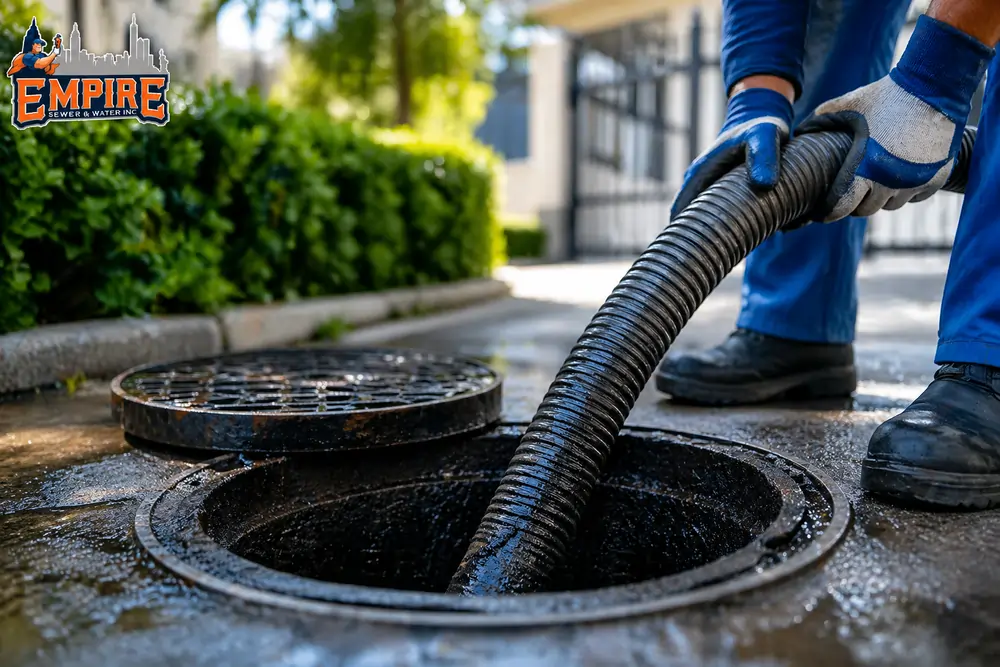
Without a sewer cleanout, a backed-up sewer line requires your plumber to either access the pipe through a toilet or sink (limiting snake depth and power) or excavate to reach the pipe directly to clear the clog. Emergency excavation for a clog, when no cleanout is present, typically costs $1,500 to $4,000 in New York on top of the sewer line cleaning service itself. Installing the cleanout at that moment turns an emergency into a larger, more expensive project than a planned installation would have been.
This is the real ROI of sewer cleanout installation: the planned installation cost of $2,000 to $5,500 in New York often compares favorably to a single emergency sewer and drain cleaning call without cleanout access, which can approach or exceed that figure when excavation, emergency rates, and surface restoration are included.
Frequently Asked Questions About Sewer Cleanout Installation Cost
How much does it cost to install a sewer cleanout?
Sewer cleanout installation costs $1,400 to $3,500 nationally and $2,000 to $5,500 in New York City. The final cost depends on cleanout type (one-way, two-way, or test tee), sewer line depth, soil conditions, permit fees, and whether concrete or asphalt must be cut and restored. Two-way cleanouts cost more but provide better long-term access.
Is a sewer cleanout worth installing in an older New York home?
Yes, for most older New York homes it is worth installing. Homes built before the mid-1980s rarely have cleanouts, and servicing a sewer line without one is significantly more expensive and disruptive. A cleanout allows snaking and hydro jetting without excavation, reducing every future service call cost and enabling faster emergency response when a backup occurs.
Can I install a sewer cleanout myself?
Installing a sewer cleanout yourself is not advisable for most homeowners. The work requires excavating to the sewer line, cutting into live drain pipe, fitting and sealing a new assembly, and restoring the surface, all while complying with New York’s plumbing code. Improper installation can crack or misalign the lateral sewer line, creating leaks, blockages, or collapses. In NYC, the work requires a licensed master plumber and a DOB plumbing permit, making DIY installation both illegal and financially risky.
How do I find a licensed master plumber in New York?
Search the NYC Department of Buildings license verification tool at nyc.gov/buildings to confirm a plumber’s master plumber license is current and in good standing. In New York State outside NYC, the Department of State licenses plumbers at the journeyman and master level. Always ask for the license number before signing any contract for sewer work.
What is the cost difference between snaking and hydro jetting through a cleanout?
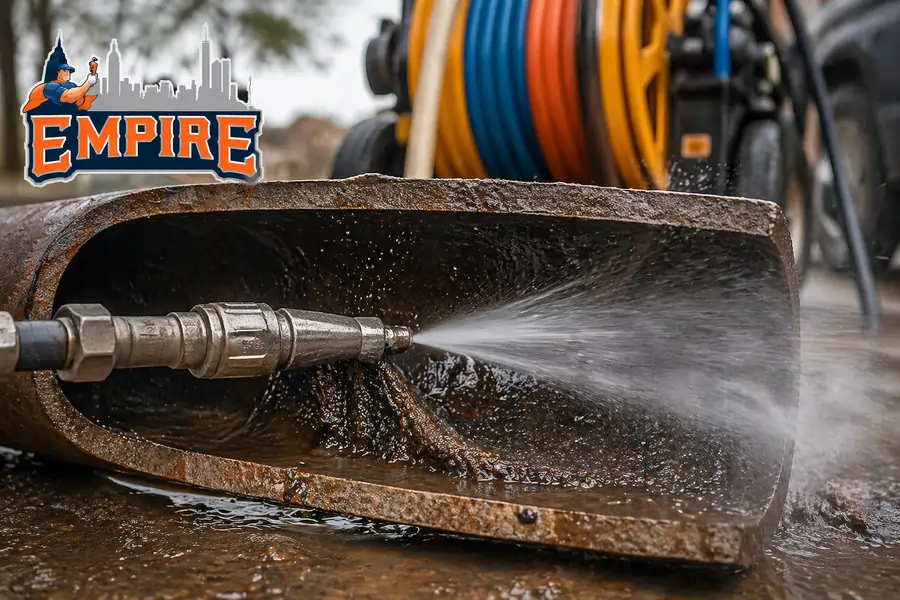
Once a cleanout is installed, snaking (drain snake or power rodder) costs $150 to $400 in New York for standard sewer line clearing. Hydro jetting, which uses high-pressure water at 2,000 to 4,000 PSI to clear grease, root intrusion, and hardened buildup, costs $400 to $800 in New York. Hydro jetting is more thorough and appropriate for recurring blockages or significant root intrusion; snaking is sufficient for soft clogs and routine maintenance.
The Bottom Line on Sewer Cleanout Installation Cost
Sewer cleanout installation cost in New York typically falls between $2,000 and $5,500, with most residential jobs coming in around $2,700 to $4,000 depending on cleanout type, pipe depth, and site conditions. The investment pays for itself by reducing the cost and disruption of every future sewer service call, and it eliminates the far more expensive scenario of emergency excavation for a backup with no access point in place.
If your home is pre-1980 and you haven’t confirmed whether a cleanout exists, that is the first call to make. A licensed New York master plumber can locate your lateral line, confirm whether a cleanout is present, and provide a written quote for installation if one is needed. Getting that information before a backup occurs is the most cost-effective position you can be in.