Slow drains, funky smells, and water that pools in your sink or shower are all signs that your pipes need cleaning. The good news is that most routine pipe buildup can be cleared with things already in your kitchen.
To clean a plumbing pipe, you can flush it with boiling water, use a baking soda and vinegar mix, run a drain snake through it, or call a professional for hydro-jetting when buildup is severe. The right method depends on how bad the buildup is and what type of pipe you are dealing with.
Here is exactly how to do it.
Signs Your Pipes Need Cleaning
Your plumbing gives clear signals before things get bad:
- Water drains slower than usual in sinks, tubs, or showers
- A foul or musty smell coming from drains
- Gurgling sounds after water drains
- Fruit flies hovering near drains (attracted to organic gunk inside)
- Water backing up into a fixture when another is in use
That last one, water from one fixture appearing in another, usually points to a deeper blockage in the main line rather than a single pipe. That situation warrants a different approach (see how to unclog a sewer line).
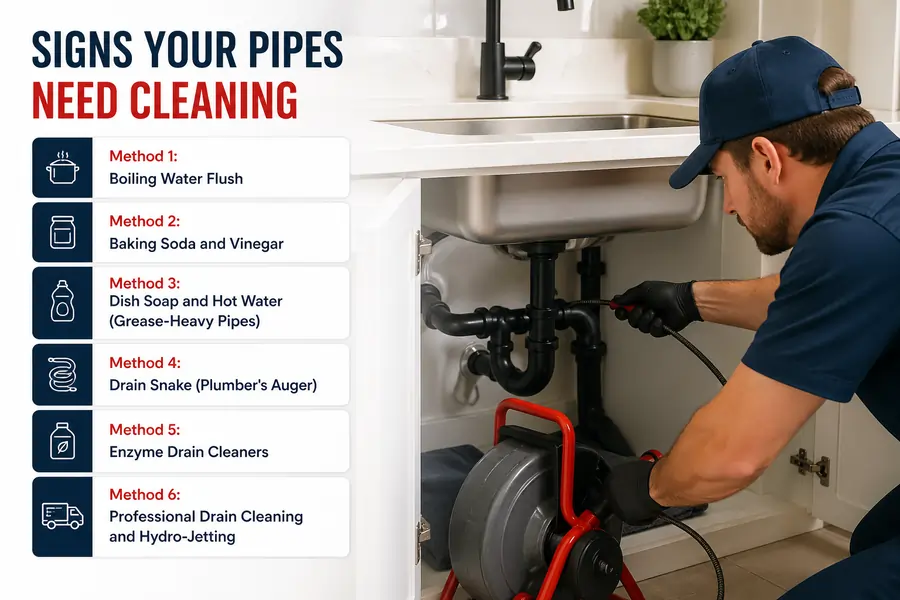
Method 1: Boiling Water Flush
Best for: Light grease and soap scum in kitchen and bathroom drains.
This is the easiest starting point. Boiling water melts grease and soap residue that clings to pipe walls.
Steps:
- Boil a full kettle or pot of water.
- Pour it down the drain in two or three slow stages, allowing 10 to 15 seconds between each pour.
- If your pipes are PVC or plastic, let the water cool slightly first (about 160°F is safe). Boiling water at 212°F can soften PVC joints over time.
- Run the hot tap for 30 seconds to flush any loosened residue.
Repeat monthly as a maintenance habit. It takes two minutes and costs nothing.
Method 2: Baking Soda and Vinegar
Best for: Grease buildup, soap scum, mild organic clogs, and odor elimination.
Baking soda and vinegar produce a carbon dioxide reaction that scrubs pipe walls and neutralizes odors. This method is safe for all pipe types including PVC, cast iron, and copper.
Steps:
- Pour half a cup of baking soda directly down the drain.
- Follow immediately with half a cup of white vinegar.
- Cover the drain opening with a cloth or stopper to direct the reaction downward rather than out.
- Let it sit for 30 minutes to an hour.
- Flush with a full kettle of hot water.
For a stronger treatment, mix 1 cup baking soda with 1 cup vinegar and let it sit overnight before flushing.
This will not clear a serious blockage, but it keeps pipes fresh between deep cleans and handles early-stage buildup well.
Method 3: Dish Soap and Hot Water (Grease-Heavy Pipes)
Best for: Kitchen drains with significant grease accumulation.
This approach works particularly well when cooking oils and fats are the main culprit.
Steps:
- Boil eight cups of water.
- Dissolve three tablespoons of dish soap in the hot water.
- Pour the mixture slowly down the kitchen drain.
- Wait five minutes, then follow with another round of hot tap water.
Dish soap breaks down fat at a molecular level, similar to how it cuts grease off dishes.
Method 4: Drain Snake (Plumber’s Auger)
Best for: Hair clogs in shower drains, debris stuck at the P-trap, localized blockages.
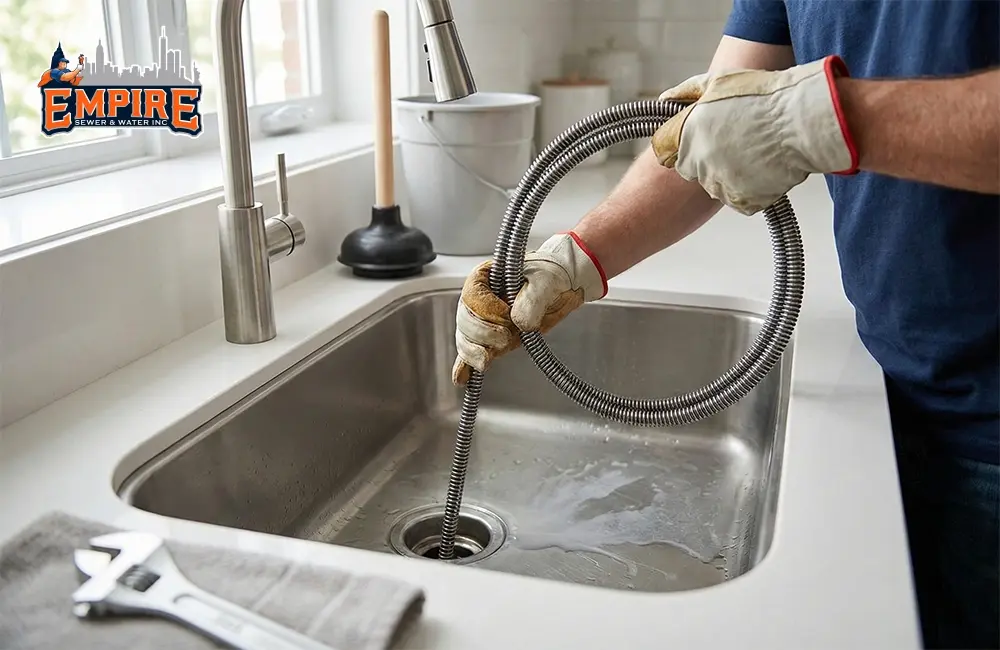
A drain snake is a flexible metal cable that physically hooks or breaks up clogs inside the pipe. Basic models are available at any hardware store for $20 to $30.
Steps:
- Remove the drain cover or stopper.
- Feed the snake cable into the drain opening.
- Crank the handle clockwise as you push the cable deeper.
- When you feel resistance, work the snake back and forth to hook or break up the clog.
- Slowly retract the cable and remove any debris caught on the tip.
- Flush the drain with hot water.
For shower and bathroom drains, hair is usually the culprit. You may need two or three passes to pull it all out.
Method 5: Enzyme Drain Cleaners
Best for: Ongoing maintenance, organic buildup (food, hair, grease), and septic-safe cleaning.
Enzyme-based drain cleaners use live bacteria to digest the organic matter inside pipes. They work more slowly than chemical cleaners but are safe for all pipe materials, septic systems, and the environment.
Follow the product label directions. Most require pouring the cleaner into a slow-running or idle drain and leaving it overnight. They work best as a monthly maintenance treatment rather than a cure for an active clog.
Avoid chemical drain cleaners (those containing sodium hydroxide or sulfuric acid) for regular use. They can corrode older pipes and often only punch a hole through a clog rather than clearing it fully.
Method 6: Professional Drain Cleaning and Hydro-Jetting
Best for: Severe or recurring clogs, grease-coated pipe walls, scale buildup, degreasing pipes.
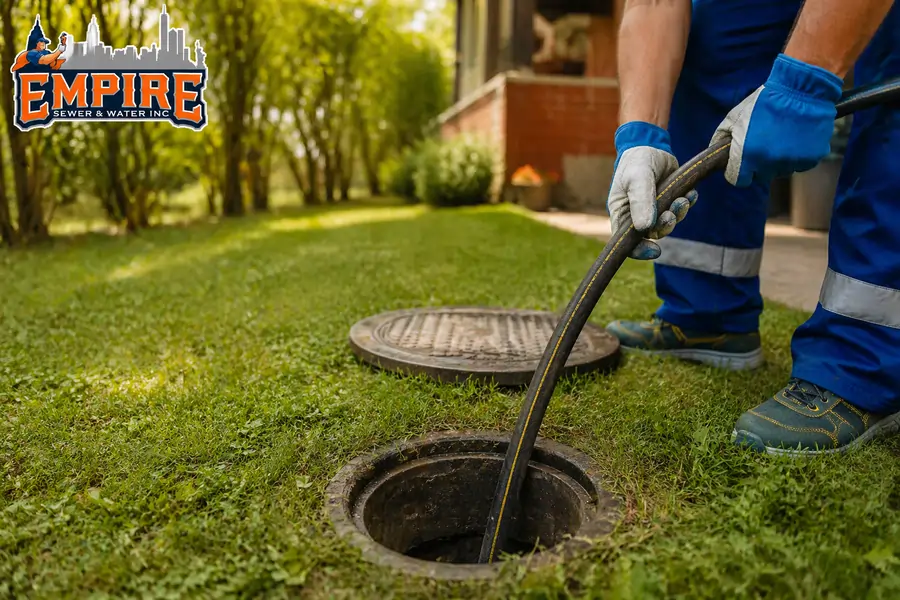
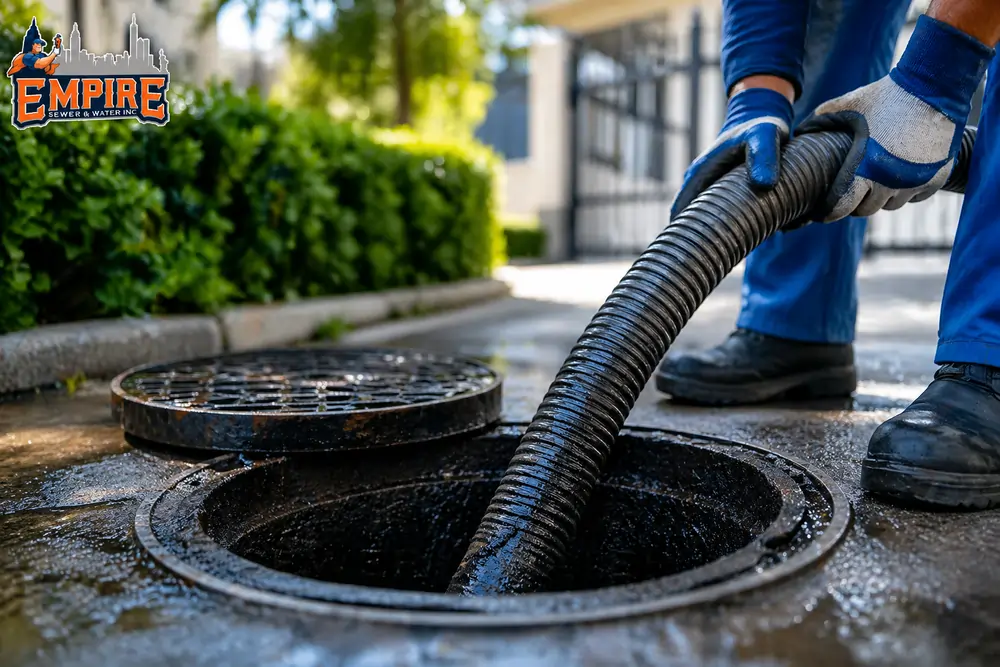
When DIY methods stop working or a clog keeps coming back, professional drain cleaning removes buildup that home tools cannot reach.
Professionals use two main approaches:
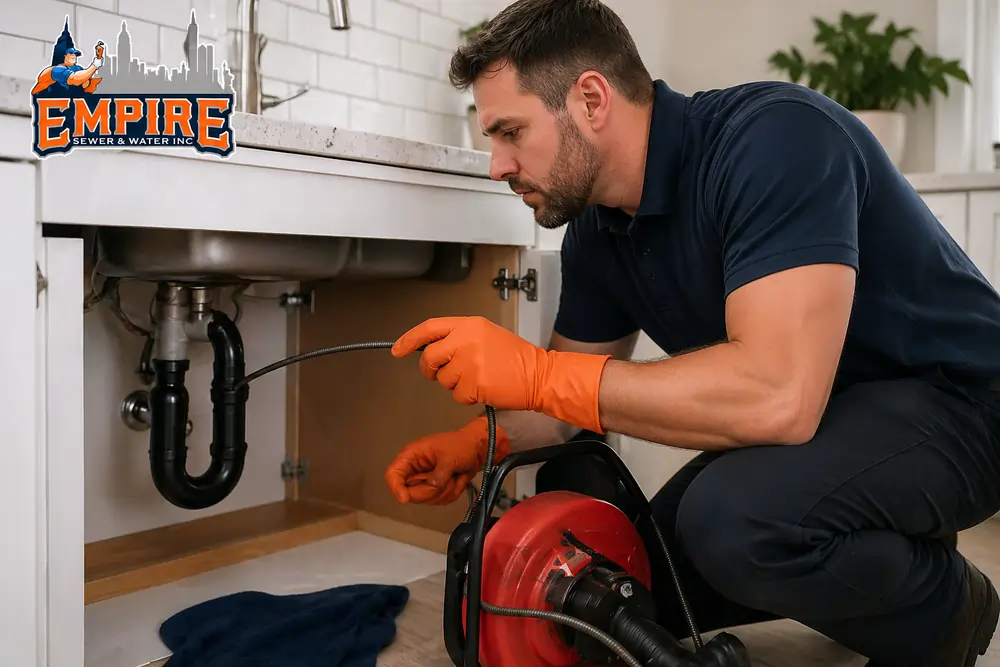
Motorized augering physically breaks up clogs with a high-torque cable. It is effective for localized blockages and costs $100 to $500 depending on depth.
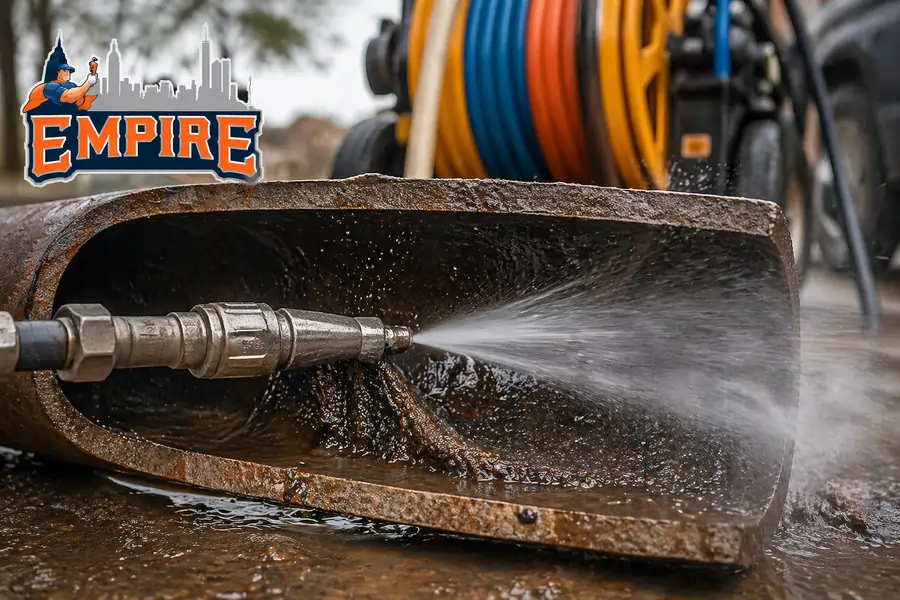
Hydro-jetting sends a high-pressure water stream (3,000 to 4,000 PSI) through the pipe to scour the entire inner diameter. It removes grease, mineral scale, and debris completely rather than just punching through the blockage. Hydro-jetting costs $350 to $1,400 and is particularly effective for degreasing kitchen lines and clearing older pipes coated with years of buildup. Learn more about what hydro-jetting is and how it works.
A sewer camera inspection can be done beforehand to identify where and what the buildup is, so the right method is used without guesswork.
How to Clean Pipes by Type
Kitchen drain pipes
Kitchen pipes accumulate grease faster than any other drain in the house. Use the dish soap and hot water method weekly and baking soda and vinegar monthly. Avoid pouring cooking oil or fat down the drain even in small amounts.
Bathroom drain pipes
Hair and soap scum are the main culprits. A drain strainer catches most hair before it enters the pipe. Use a snake every few months to pull out any hair that makes it past the strainer, and follow with a hot water flush.
Shower drain pipes
Same approach as bathroom drains. Strainers are especially useful here. A baking soda and vinegar flush monthly keeps the drain fresh and prevents slow-drain buildup.
Toilet drain pipes
Use a flange plunger for blockages. Do not pour any cleaning solutions directly into the toilet trap with the goal of cleaning the pipe as they will dilute before reaching the buildup. For recurring toilet clogs, a professional camera inspection can identify whether the issue is in the toilet trap or deeper in the drain line.
Water supply pipes
If you are dealing with low water pressure or discolored water from faucets, the issue is likely mineral scale inside your water supply pipes rather than drain pipes. This is common in areas with hard water. Flushing supply lines and cleaning aerators helps, but significant scale buildup in supply pipes typically requires a professional assessment or pipe descaling service.
How Often Should You Clean Your Pipes?
- Boiling water flush: Monthly, for kitchen and bathroom drains
- Baking soda and vinegar: Monthly or whenever odors develop
- Enzyme drain cleaner: Monthly, especially in households with heavy grease use or septic systems
- Drain snake: Every 3 to 6 months for bathroom and shower drains
- Professional drain cleaning: Every 18 to 24 months for a full system cleaning
According to professional plumbers, most residential plumbing systems benefit from a professional sewer line cleaning every 18 to 24 months to remove buildup that accumulates beyond what DIY methods reach. If your home is older or has a history of slow drains, annual cleaning is worth the investment.
What Not to Put Down Your Drains
The easiest way to keep pipes clean is to keep the wrong things out of them:
- Cooking grease and oils: These solidify inside pipes and create stubborn, layered blockages
- Coffee grounds: They accumulate in P-traps and compact into a paste
- “Flushable” wipes: These do not break down and cause main line blockages
- Pasta, rice, and starchy foods: These expand with water and clump inside pipes
- Hair: Use a strainer in every shower and bathroom drain
- Harsh chemical cleaners: These corrode older pipes and rarely solve the root cause
FAQ
What is the best way to clean pipes at home?
For light buildup and maintenance, a baking soda and vinegar flush followed by boiling water is the most effective DIY method. It is safe for all pipe materials, cheap, and handles grease and odor well. For more serious buildup or hair clogs, a drain snake is more effective. Enzyme-based cleaners work best as a monthly preventive treatment.
How do I clean pipes without a snake?
Start with a boiling water flush to melt grease. Follow with baking soda and vinegar to break down organic material. For bathroom drains, use a bent wire hanger or a plastic hair removal tool (available at hardware stores for a few dollars) to hook hair near the drain opening. If these methods do not restore flow, the blockage is likely deeper than DIY tools can reach.
Is baking soda and vinegar safe for all pipes?
Yes. Baking soda (a base) and vinegar (an acid) neutralize each other in a fizzing reaction that scrubs pipe walls without corroding the pipe material. This combination is safe for PVC, copper, cast iron, and galvanized steel pipes. It is also septic-safe, unlike many chemical drain cleaners.
How do I know if my pipes need professional cleaning?
If DIY methods have not improved drainage, if the same drain clogs repeatedly within weeks, if multiple drains are slow at the same time, or if you notice sewage odors coming from floor drains, call a professional. These signs indicate buildup or a blockage that has progressed beyond what home tools can address.
How do I clean water supply pipes?
Water supply pipe cleaning is different from drain cleaning. If you have low water pressure or discolored water, start by cleaning faucet aerators and showerhead filters, which collect mineral deposits. Flushing individual supply lines can help with sediment. Significant mineral scale inside supply pipes requires a professional assessment, as the cleaning method depends on pipe material and the type of scale present.
Summary
Cleaning your home’s pipes does not require special tools or chemicals for routine maintenance. A monthly boiling water flush, a baking soda and vinegar treatment, and a drain strainer in every shower will prevent the majority of household clogs. For hair and deeper blockages, a basic drain snake handles the job. When buildup has progressed past what DIY methods can clear, professional drain cleaning or hydro-jetting restores full flow and protects older pipes from damage.
Keep grease and non-flushables out of your drains, clean monthly, and schedule a professional cleaning every 18 to 24 months. That routine keeps most plumbing problems from ever becoming expensive ones.